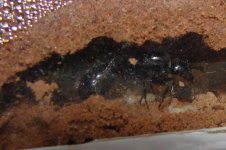
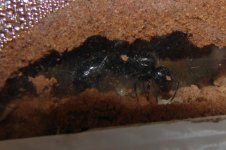
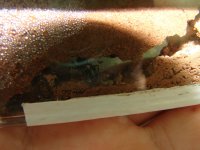
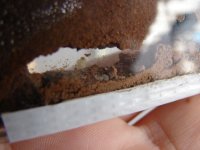
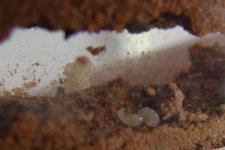
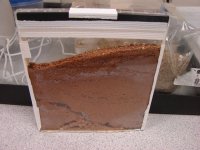
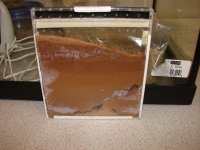
This size ant farm is small, it's true. But it will work fine until the colonies get established, and then I can put them in something bigger. That will take a while, though, maybe up to a year. And, I can also just connect a foraging container to the CD case via tubing, and that would open up more room for them.
The queens have already been fertilized. When new queens leave a colony, they go on a mating flight, mate, land, tear off their wings, and start digging a new colony (in most species, this is how it works anyway--in some species the queens return to their old colony). They won't need to mate again for their whole lives, and whether they use the sperm to fertilize their eggs or not determines whether the egg develops into a male or female (can't recall which is which). Queens only produce males once the colony is mature and is ready to reproduce. All workers are females, and just like in social bees, males don't do anything and aren't good for anything but mating, and they don't live for very long, just a few days after taking off on mating flights.
Some queens have lived in captivity for as long as 20 years.
In some species of ants, the babies do grow up into different castes. Army ants have quite a few castes, as do the leafcutter ants--there are cutters, carriers, specialized tiny workers whose job it is to keep all types of invasive fungus out of the colony's fungus farm (weeders, I guess). I believe the way that works is that caste is determined by how the larvae are fed by the workers, but I'm a little foggy on that, to be honest.
For a wonderfully interesting and very accessible read that will introduce you to the amazing diversity of ants and their ecologies, check out Journey to the Ants. It's a fabulous book and you'll learn so many cool things about ants that even if you don't really like ants (like I didn't), you won't be able to help but find them really fascinating afterwards. It's perfect for reading a chapter a night before bed or something like that. I need to re-read it, myself!


 I've got some set up in little ant farms I made out of CD cases, and it's working pretty well I think.