
I accompanied 16 high school students from the Greater Cleveland Area to an outing in Carter Caves, Kentucky. The fist day was relatively cool, with the temperature perhaps reaching 60 degrees and partly sunny. On day two it was mostly sunny with a high temperature of around 65. We found a greater diversity of reptiles and amphibians than our last visit to the caves in 2007.
Day one started with a tour of X-Cave and a hike on a nearby trail. The purpose of the hike was to scope out good herping spots for our return visit to the area that same afternoon. We found a creek that looked good.
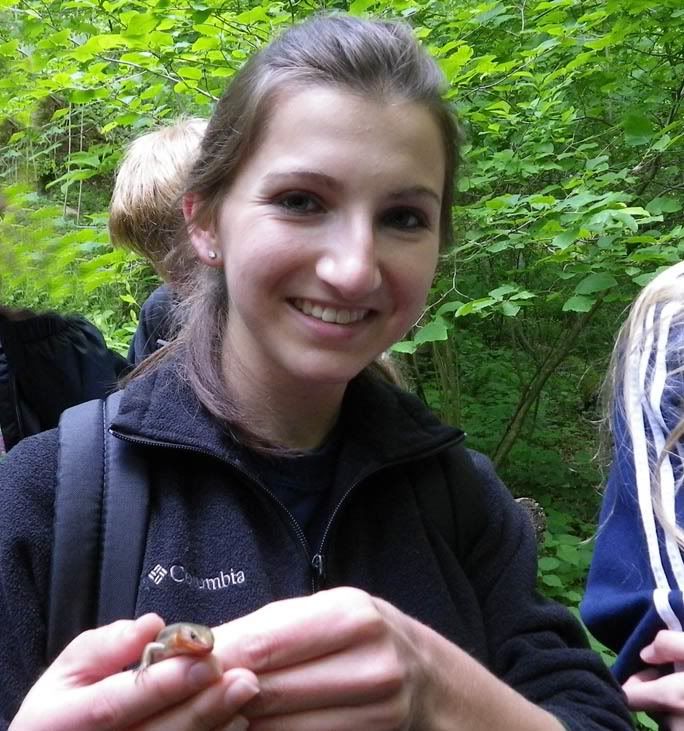
Northeast Ohio is a "lizard poor" area of the United States. For some of the students it was the first time they saw (and in some cases, caught) a wild lizard. This male Five-lined Skink was seen poking its head out of a hiding spot along the trail and with the temperature in the 50s, it was easily caught by one of the students.
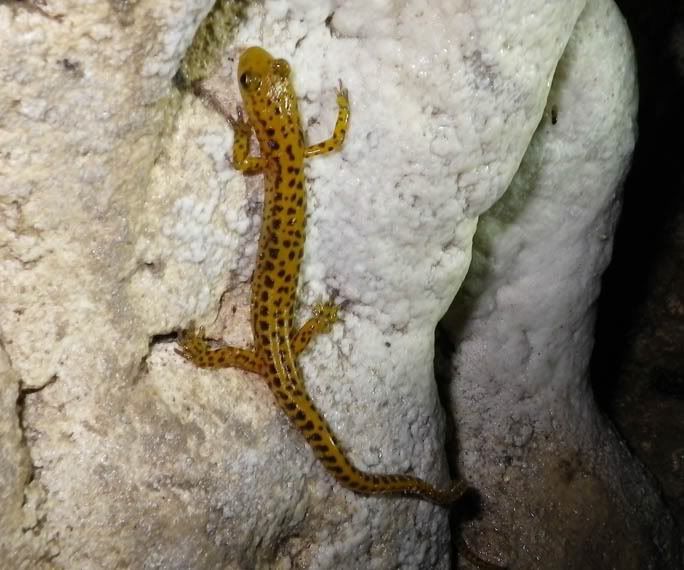
In the afternoon we returned to the creek to see what sort of amphibians we could turn up. By far, the students got the most excitement about finding Longtail Salamanders.
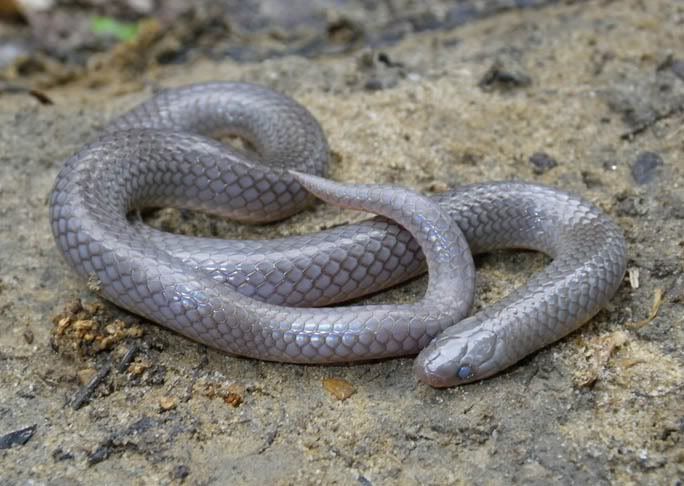
Further exploration down the creek revealed a Beaver Dam and in the floodplain area around it, we found the first snake of the trip - a Midwest Worm Snake (the first of three) deep in shed.
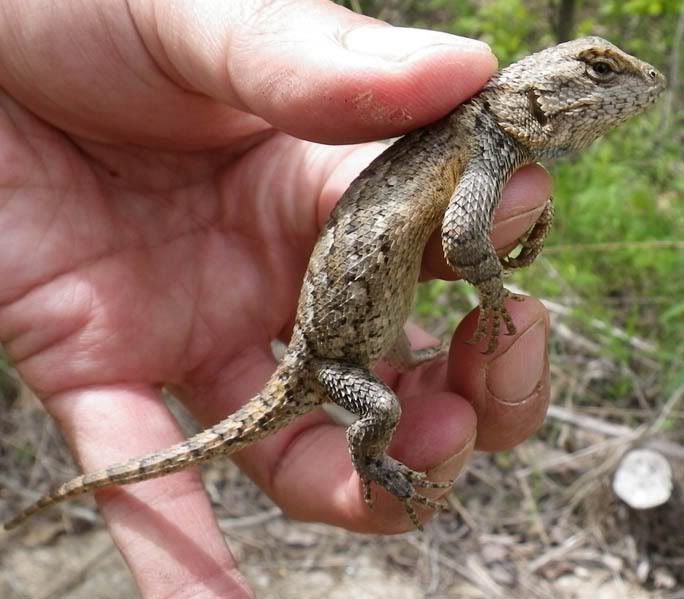
The next day we had a tour of Cascade Cave booked for the morning, followed by canoeing/shoreline herping in the afternoon. In the afternoon the conditions were good enough for Fence Lizards to be out, so we captured a few. I've caught my share of "ugly" Eastern fence Lizards, but these were kind of colorful...for a Fence Lizard.
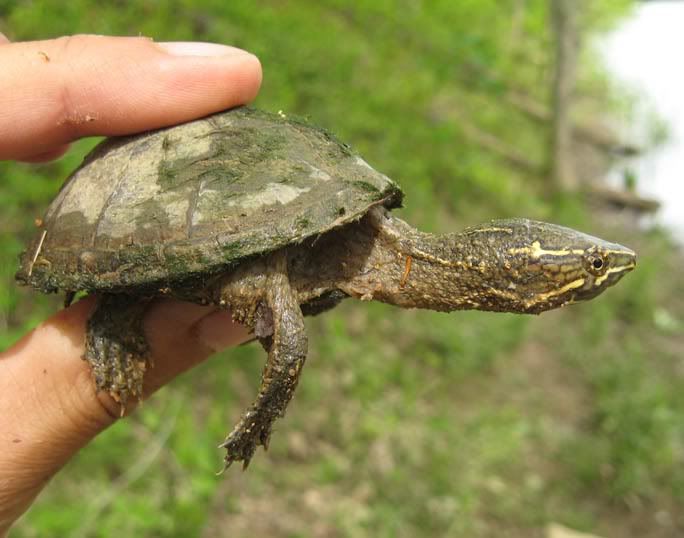
The first turtle discovered on the trip was this small Stinkpot, which didn't mind at all using its musk defense tactic and willingness to bite to show that it shouldn't be messed with.
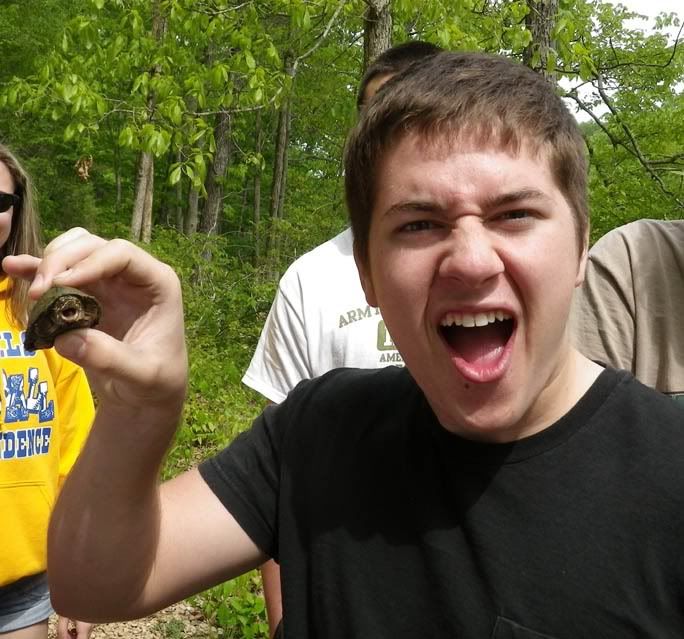
Some students chose to emulate the cantankerous turtle.
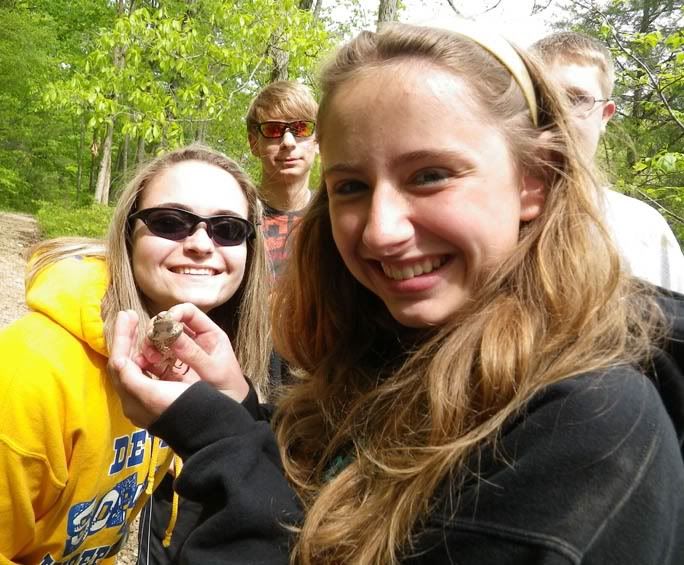
While others found that the more mild-mannered Fence Lizards suited their personalties.
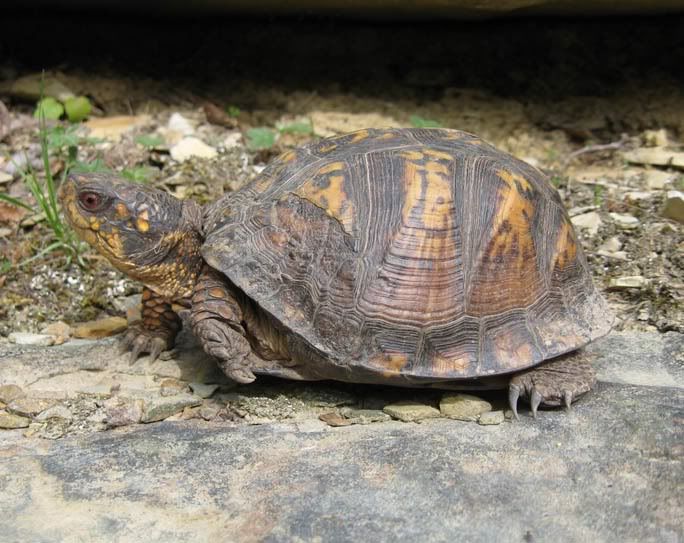
After we got back to the lodge, three students decided that they didn't want to stop herping, so we went on a short hike and came up with our second turtle of the trip - an Eastern Box. It looks like it had some significant shell damage in the past, but otherwise seemed healthy.
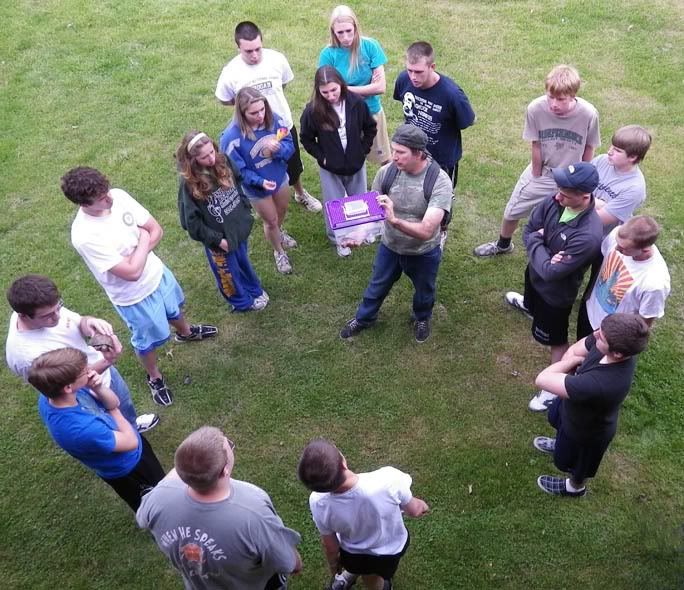
As the trip came to a close, I gave a presentation on the herps we had found.
One last solo hike produced my final find (and a good one) - an Eastern Black Kingsnake.

Our total species list of herps found was as follows:
Longtail Salamanders
Two-lined Salamanders
Dusky Salamanders
Slimy Salamanders
Kentucky Spring Salamander
Red Eft
Larval Red Salamanders
Pickeral Frog
American Toad
Green Frog
Wood Frog
Midwest Worm Snakes
Ringneck Snake
Black Kingsnake
Five-lined Skinks
Fence Lizards
Stinkpot
Eastern Box Turtle
It was a fine way to spend a couple of days in early May!
Day one started with a tour of X-Cave and a hike on a nearby trail. The purpose of the hike was to scope out good herping spots for our return visit to the area that same afternoon. We found a creek that looked good.
Northeast Ohio is a "lizard poor" area of the United States. For some of the students it was the first time they saw (and in some cases, caught) a wild lizard. This male Five-lined Skink was seen poking its head out of a hiding spot along the trail and with the temperature in the 50s, it was easily caught by one of the students.
In the afternoon we returned to the creek to see what sort of amphibians we could turn up. By far, the students got the most excitement about finding Longtail Salamanders.
Further exploration down the creek revealed a Beaver Dam and in the floodplain area around it, we found the first snake of the trip - a Midwest Worm Snake (the first of three) deep in shed.
The next day we had a tour of Cascade Cave booked for the morning, followed by canoeing/shoreline herping in the afternoon. In the afternoon the conditions were good enough for Fence Lizards to be out, so we captured a few. I've caught my share of "ugly" Eastern fence Lizards, but these were kind of colorful...for a Fence Lizard.
The first turtle discovered on the trip was this small Stinkpot, which didn't mind at all using its musk defense tactic and willingness to bite to show that it shouldn't be messed with.
Some students chose to emulate the cantankerous turtle.
While others found that the more mild-mannered Fence Lizards suited their personalties.
After we got back to the lodge, three students decided that they didn't want to stop herping, so we went on a short hike and came up with our second turtle of the trip - an Eastern Box. It looks like it had some significant shell damage in the past, but otherwise seemed healthy.
As the trip came to a close, I gave a presentation on the herps we had found.
One last solo hike produced my final find (and a good one) - an Eastern Black Kingsnake.
Our total species list of herps found was as follows:
Longtail Salamanders
Two-lined Salamanders
Dusky Salamanders
Slimy Salamanders
Kentucky Spring Salamander
Red Eft
Larval Red Salamanders
Pickeral Frog
American Toad
Green Frog
Wood Frog
Midwest Worm Snakes
Ringneck Snake
Black Kingsnake
Five-lined Skinks
Fence Lizards
Stinkpot
Eastern Box Turtle
It was a fine way to spend a couple of days in early May!


