• Hello!

    Either you have not registered on this site yet, or you are registered but have not logged in. In either case, you will not be able to use the full functionality of this site until you have registered, and then logged in after your registration has been approved.

    Registration is FREE, so please register so you can participate instead of remaining a lurker....

    Please be certain that the location field is correctly filled out when you register. All registrations that appear to be bogus will be rejected. Which means that if your location field does NOT match the actual location of your registration IP address, then your registration will be rejected.

    Sorry about the strictness of this requirement, but it is necessary to block spammers and scammers at the door as much as possible.

Help me identify this?

JesseTrash

New member
9e13e75ea723a0c3452aaf21b985291b.jpg
7925d5d697d8a1f4cc19bc71ff18a53f.jpg


Sent from my iPhone using Tapatalk
 
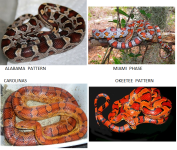
4 of the more prominent "Normal patterns" - the one you have posted resembles the "Alabama corn" with its darker reds in my opinion
 

Attachments

  • corns.png
    corns.png
    897.9 KB · Views: 50
It looks like a Classic. If you want to know the only alternative I can think of, it might be an Abbott's Okeetee, but it's almost definitely just a dark Classic.

Here's a site you can use to identify it.
http://www.allaboutcornsnakes.com/corn_snakes.html
The borders are nowhere near thick enough to be okeetee phase of any variety. While all about cornsnakes is one of the first resources I and many others used to identify morphs, it's only moderately accurate and by no means complete. Even the "best" morph gallery is littered with mistakes and misinformation. In time you'll learn to recognize them.
 
Karl
All normal babies looks like this alabama corn on your picture as an hatchling/juvenile, and turn out to be more like carolinas as they grow...
I can't see this picture right because all are adults but the alabama is a juvenile cornsnake, so...
and what comes next is, that there are sooooo many mixed forms from these four lokal forms, and then the hidden gene's that makes the snakes looks more different like a other one with other gene's
... you are not be able to tell the right 'form' only by a picture ... thats what I'm thinking
 
Back
Top