• Hello!

    Either you have not registered on this site yet, or you are registered but have not logged in. In either case, you will not be able to use the full functionality of this site until you have registered, and then logged in after your registration has been approved.

    Registration is FREE, so please register so you can participate instead of remaining a lurker....

    Please be certain that the location field is correctly filled out when you register. All registrations that appear to be bogus will be rejected. Which means that if your location field does NOT match the actual location of your registration IP address, then your registration will be rejected.

    Sorry about the strictness of this requirement, but it is necessary to block spammers and scammers at the door as much as possible.

Babies gone arboreal

sachamama

New member
Hi there, this is a great forum, Im so grateful for it. I just acquiered 2 baby amel corns, these are my first snakes. So to find this wealth of live information is fantastic. I look forward to exploring.

I will make a proper intro but at the moment Im a little concerned about something and would like to ask for tips. We bought a lovely front opening little but tall viv, and after I placed the hide and bowl of water on the floor, I attached a plastic plant on the glass wall. It kind of cascades down along the whole wall.
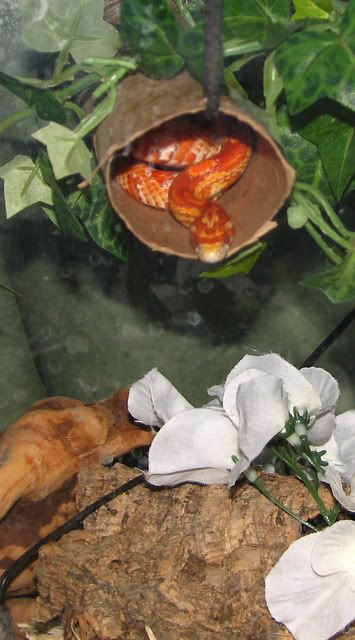
The minute I put my babies inside, they shot up the plant, never to be seen again amongst its thick foliage :laugh01:
They have been up there for days now, during they day they wont be seen elsewhere.

I love it that they love the vertical dimension of this new viv. Their previous tank was boringly 2D only, this must be so exciting for them. They also have a branch climbing up the back wall but I dont think they'v even bothered exploring it - they have definitely became the jungle tree snake now :eek1:

Its quite a surprise as most books tell me they wont climb much, and yes I saw all those photos where people keep them in low acrylic shoe boxes. Im very happy for them but for one thing:

I really want them to be tame, human friendly pets, if possible, and for that I've been recommended to handle them a lot. - I am completely in love with them, bytheway :crazy02: But I can't get hold of them now, they are so entangled in the plastic greenery. I feel concerned that if I grabbed them and pulled them out they'd associate me with menace and start avoiding or even biting me. What do you think, when I really want to handle them a lot, would be a good solution to this problem? Thank you for help!

~~~~~~~~c Sachamama
 
mine use to stay hidden all time also and i just left it alone and now after alil over a month she finally comes out all the time at night and thats when i hold her and she lets me, but then again she really has no choise, im sure you it will come down and you can handle with maybe a little bit of problems but it wont last long in according to me anyways
 
First off, welcome to the forum!

However, let me just say. Cohabitation can be extremely risky, and doing so can endanger the health of your Cornsnakes. Snakes are solitary animals and do not require nor seek out company in the wild. When you see them huddled up together it's not because they like each other, it's because they're competing for the best hiding spot and temperatures. So please, get another tank as soon as possible. :)

This behaviour is completely normal, snakes are shy creatures by nature, and will go to the area in which they feel enclosed and secure. You should have two hides, one on the warm side and one on the cool side. Temps should be 80 - 85 warm side and 70 - 75 cool side, and should be provided by a thermostatically-controlled heat mat. Cornsnakes love to climb, so if you have a tall viv - use the space! :)

As a rule, you should give new snakes 3 days to settle in before any disturbances, and 5 days before attempting to feed. You should be feeding both snakes seperately, each in their own plastic tub/box outside the vivarium. This is to prevent ingestion of substrate, and in your case, this prevents the babies from going for each others food and potentially eating each other (yes it does happen). For an accurate weight to prey size feeding chart, check out the Munson Plan.

As a rule, you shouldn't handle hatchlings and young snakes very often, as it's very stressful as they see you as a potential predator to begin with. Handling 2 times a week for about 5-10 minutes is sufficient. Just as a warning, you will probably be bitten at one time or another, and I can honestly say, IT DOESN'T HURT. Not from hatchlings anyway, they rarely puncture the skin! As you get more experienced you find handling and the picking up process a lot easier, which in turn makes it easier on the babies; so you're less likely to be bitten. As they grow they calm down a lot (in nearly all cases), so you shouldn't have any worries about not having a relatively tame pet in the future.

This is really important: DON'T HANDLE FOR 48 HOURS AFTER FEEDING. This prevents regurgitation which is a really serious issue.

I hope that helps

David
 
Hi, thank you for your replies, that was quick :)

Snakewispera, as your question was shorter - its 300 x 300 x 450 mm. The snakes themselves are around 25 cm long. The viv is a bit bigger then what was recommended to us in the shop, was told that smaller is better for them as they feel more secure. They seem quite happy though, feed well. They are hiding in the "tree" but they dont look frightened or anything as they sit coiled up in the "branches" but quite in the view, if they really wanted to hide away they could slide much further away. It feels like they are fairly comfortable.

Hello David, thank you for welcoming me, it really is a pleasure to be here :)

I have read up a lot of the beginner's information. Bought 2 books, Corn & Rat snakes by Philip Purser, and
Corn Snakes (Reptile Keeper's Guides) by Bartletts.

Now I found out a good book is supposed to be .. Manual by Kathy Love.I liked her website and will buy the book too. Anyway, just to say that I tried to get all the conditions right but its amazing how there is some contradicting information from different sources. Ie was told 2 snakes together are fine at least before they get breeding age and if not 2 males. I do feed them in separate tubs. Well I take one out and feed the other in the viv - is that not good, and why?

But in spite my great enthusiasm and affection right from the start, they have been having various troubles all along. I called them Ra (Sun god of Egypt) and Re (another spelling of the same). So Re, who was lighter coloured and "more chilled out" to start with, was shedding just as I was buying her. (They have not been sexed, Im just guessing :) )

Not only that but she also had difficulties with it so the guy in the pet shop put her in the bath for the night and helped her to shed. But 3 days later I have, with my untrained eye, discovered she stil had dry skin on her face. I followed the instructions and dabbed her with wet cotton bud yet was completely unable to get hold of these bits. I could see there was dry skin around the eyes and I read this can be dangerous. So next day we drove her back to the shop and the guy peeeled it off, also found more skin on the very tip of the tail. God, these bits are so tiny and hardly visible, what a job! This was my intro to snake keeping :). There was more trouble but Id write novels here, and its all sorted now, just wasn't clear about the handling for the moment.

Thank you again for all your replies, its lovely to meet you and I look forward to learning more and more...
 
I'll leave the co-habbing subject well alone............
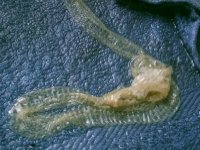
But for problem sheds, I recommend a Snake-O-Bath. Put a wrung-out flannel in a lunch box with small ventilation holes, leave the snake in there for an hour and the dry shed should come off
 

Attachments

  • snakeobath.JPG
    snakeobath.JPG
    75 KB · Views: 175
Basically, reasons against cohabitation are:

1. If you find a regurgitated mouse or a green poo, then you don't know whose it is and can't act on it accurately.

2. It greatly increases stress levels, which leads to increased risk of regurgitation and even going off feeding, especially if there's competition for the optimal digestion spot.

3. Corns are completely solitary in nature, and if we are to attempt to replicate their natural environment and/or give them the best living conditions possible, then we must keep them seperately.

4. If you keep unsexed Cornsnakes together then there's a big risk of premature breeding. If you don't know they've mated, and there's no egg-laying spot (damp area of moss or something like that), the female can become egg-bound and die.

There's a whole list of why cohabitation is bad. It's often seen as bad husbandry because of this, and the person who keeps them can be seen as 'stingy' because they don't want to fork out for more than one tank. I'm not saying this is the case with you, but it does tend to draw out the miser.

You shouldn't feed either of them in the vivarium really, what substrate are they on? It's acceptable if it's paper towels or newspaper, but anything else and you're taking a big risk, due to gastro-intestinal impaction from ingestion of substrate. Also, feeding in the vivarium can help reinforce the idea that the snake has; movement in the vivarium = food. So you're more likely to get a feeding response. And you said yourself, you're not keen on getting bitten.

At the end of the day, I've given you the facts and it's up to you to make that final decision. I personally (and many others on the forum will agree) believe that they should be seperated, trust me, they won't miss each other.

All the best

David
 
aggreed co habitation is bad and if a whole nother viv is to much $$ do the rubbermaid solution its fairly cheap and good luck with the snake's


Hunter:)
 
Hi guys,
thanks again for replies. Well I can see these reasons make a lot of sense. Will give it more thought ... but will read up on this and other issues more. ££ is not a problem too much, these vivs are surprisingly low cost. But I was convinced they love hunging out together, they are often coiled up together with their heads next to each other, they were bought together I believe from the same litter. I can see how feeding them out of the tank makes sense - especialy in preventing them biting :) I feed them from tongues (tweezers?) so the food doesnt touch their aspen shaving substrate. I fed Ra on his tree as he didnt come down and I didnt want to distress him by pulling him off. But wont do it again because of the asociations for him.

Thank you again for educating me, I really want to learn the best. Im already hooked! Had to laugh about Janine's "I forgot to stop at 10 snakes" - I can see that might be my case one day, I already browse the net for different morphs and dreaming of breeding new varieties :)

Btw is that correct that UK law has forbidden reptile shows recently? Does this affect breeders in any way? Where could I read up on this legislation? And could you recommend places - breeders - to buy good quality morphs in the UK? Thanks again.
 
They 'hang out together' because they are competing for the best position to be in, the right temperature, best hide etc. Corns are not considered social animals at all.
That being said, co-habbing is practised more often on the continent, but generally in very large naturalistic vivs. As a new keeper you may want to do a search on co-habitation, and rather than read opinions, read experiences that have been positive and negative from people who do cohab, and those who used to and now choose not to.
These are your corns, your responsibility, and it's your choice how you keep them. However, given the known risks of co-habbing, if you run into problems you may get little sympathy.
 
Ra & Re, various questions?

Hi everybody,

thank you for your previous tips and messages. Several days later, some of you will be pleased to hear that my two snakes now have their separate two vivs. I got the exo-terra 30x30x45 vivs, they each have a t-rex heat pad under about 1/2 of the tank. They both prefer to sit in the plastic plant branches anyway.

I do like it this way - must say it all looks very pretty and my visitors are usually delighted, even some converted from previous snakephobes, ie my landlady! She now agreed that the snakes can live with us longterm though originally I was going to move anyway and so she agreed to house them temporarily. The babies work their cute magic!!

Thank you Snake Dave for Munson plan, that looks like something very useful for the future reference. Thanks to it and to weighing one of my kids for the first time I discovered they should be now started on two pinkies each.

1) Is there any descriptive info on this forum about how to change the step in feeding? IE do I feed them the 2nd pinky right after the first one or do they wait a bit?

2) Unfortunately, they were fairly sparse in the pet shop with the information. They couldnt tell me their age. All they could say was they were born in 2007 so it could be anything. Any tips on guessing age?

3) Perhaps by length, but how do you measure a wriggly hatchling? To stretch it seems a bit embarrassing to the snake... :)

4) Where could I learn all this morph speak - a book, website etc? I mean where could I see various pics of morphs and learn about their names etc. I dont even know what mine is. Only sold to me as amelanistic, for me they were just pretty pink/orange corns with bright red saddles... but Im discovering that there is much more subtlety to it than that. As an artist I find their colours and patterns fascinating and some day in the future would love to have an informed go at breeding..

Thanks again,

Sachamama and her happily digesting wiggly worms full of attitude
 
Hi everybody,

thank you for your previous tips and messages. Several days later, some of you will be pleased to hear that my two snakes now have their separate two vivs. I got the exo-terra 30x30x45 vivs, they each have a t-rex heat pad under about 1/2 of the tank. They both prefer to sit in the plastic plant branches anyway.

Hey again :)

Hey that's great! Hopefully they'll appreciate the extra room. Usually it's recommended that you only place the heat pad under a 1/3 of the tank. :)

sachamama said:
I do like it this way - must say it all looks very pretty and my visitors are usually delighted, even some converted from previous snakephobes, ie my landlady! She now agreed that the snakes can live with us longterm though originally I was going to move anyway and so she agreed to house them temporarily. The babies work their cute magic!!

That's great news!

sachamama said:
Thank you Snake Dave for Munson plan, that looks like something very useful for the future reference. Thanks to it and to weighing one of my kids for the first time I discovered they should be now started on two pinkies each.

That's no problem, it's a great guide and I've used it since Salazar was on two pinkies.

sachamama said:
1) Is there any descriptive info on this forum about how to change the step in feeding? IE do I feed them the 2nd pinky right after the first one or do they wait a bit?

That's up to you. Sometimes the snake can become overwhelmed by the number of prey items and feel intimidated if both are fed at once. How do you feed? Do you place the pinkie down and just let them swallow it or do you dangle it with a pair of forceps? Just let the snake eat the first one, let it go down and once it has stopped moving, feed the next one. :)

sachamama said:
2) Unfortunately, they were fairly sparse in the pet shop with the information. They couldnt tell me their age. All they could say was they were born in 2007 so it could be anything. Any tips on guessing age?

To be honest, guessing ages is very difficult in snakes, as growth rates vary so much. Most hatchlings are born in early Spring to mid-Summer. For example, my Corn Salazar is an 07, and he hatched out in May. But I got him in August 07, so he's been on the Munson Plan for most of his life so far, so he's probably a lot bigger than your snakes, which were kept on what's called a 'sustainment' diet. They're fed this way since it saves the store money. Salazar is now 161 grams and about 28" long.

sachamama said:
3) Perhaps by length, but how do you measure a wriggly hatchling? To stretch it seems a bit embarrassing to the snake... :)

You could place a tape measure down on the bed and fix it in place (to about 30"), and then put your snakes perpendicular to it and as they move forward they'll stretch out naturally and you can try and quickly get the reading. Or, when they next shed you can just measure the shed (however, the skin'll stretch during the process so take an inch or two off).

sachamama said:
4) Where could I learn all this morph speak - a book, website etc? I mean where could I see various pics of morphs and learn about their names etc. I dont even know what mine is. Only sold to me as amelanistic, for me they were just pretty pink/orange corns with bright red saddles... but Im discovering that there is much more subtlety to it than that. As an artist I find their colours and patterns fascinating and some day in the future would love to have an informed go at breeding..

I highly recommend Kathy and Bill Love's 'Corn Snakes: The Comprehensive Owners Guide'. It's a fabulous book and goes into great detail on every aspect of husbandry, breeding and genetics. There's plenty of pictures and all the morphs you can dream of :grin01:

If you pop down to WHSmith's, you can order it in there. :)

All the best

David
 
Here's a helpful link for corn snake morph pics and descriptions. Please bear in mind though, that all morphs still have variations in colour, pattern etc, but this will give you a pretty good start on getting to know the different morphs.

http://www.iansvivarium.pwp.blueyonder.co.uk/cornmorphs.html

Also as Snake Dave said, Kathy and Bill Love's book is excellent, I highly recommend it.

Hope that helps, best wishes,
 
You are getting some great advice, so I'll just share a picture... this is a 2006 little girl, Gailleann, who went from a small bonzai type tree (real) to this paper towel tube. I'm trying to figure out what to replace it with... it's getting a little snug in there :)

IMG_4950.jpg
 
Great tips, thank you

I still have to work it out how to quote messages.. Till then - thank you Snake Dave again for extensive answers. I feed with forceps, thats what I was told to start with, didnt know a snake would take a dead mouse from the bowl. Well now I know but I quite like the personal contact in feeding this way. Looking forward to surprising them next week with 2 pinkies :dancer:

Will get the Love's book, sounds really good!
Im amazed how big your Salazar is when they might be potentially similar age with mine! That really says it all about the growth rate, wow. Hope mine will start growing better too, although I have also read about "power feeding" and how it shortens their life expectancy. Hope that this is something else though.

Susie,

thanks for that morph link - yes, it really makes a good start. Im enjoying looking through it.

What exactly does the word Motley mean? Im not only a snake newbie but also English is my 2nd language. I live in UK but come from the Czech Republic, so please excuse my confusion sometimes :)

Weebonilass,

what a great picture of your girl in a tube :) I bet she loves it! So magically I immediately found 2 looroll tubes in our recycling box and soon my snakes will be enjoying their tree house too. Good tip!
 
I still have to work it out how to quote messages.. Till then - thank you Snake Dave again for extensive answers. I feed with forceps, thats what I was told to start with, didnt know a snake would take a dead mouse from the bowl. Well now I know but I quite like the personal contact in feeding this way. Looking forward to surprising them next week with 2 pinkies :dancer:

Will get the Love's book, sounds really good!
Im amazed how big your Salazar is when they might be potentially similar age with mine! That really says it all about the growth rate, wow. Hope mine will start growing better too, although I have also read about "power feeding" and how it shortens their life expectancy. Hope that this is something else though.

Susie,

thanks for that morph link - yes, it really makes a good start. Im enjoying looking through it.

What exactly does the word Motley mean? Im not only a snake newbie but also English is my 2nd language. I live in UK but come from the Czech Republic, so please excuse my confusion sometimes :)

Weebonilass,

what a great picture of your girl in a tube :) I bet she loves it! So magically I immediately found 2 looroll tubes in our recycling box and soon my snakes will be enjoying their tree house too. Good tip!


Motley is a pattern found in cornsnakes. If you do a look through on the picture gallery, you should find plenty. I have two motleys, but the first one doesn't have a clean pattern... he's motley, aztek and normal. And my little Sunglow... well, I haven't gotten a clean or even semi good picture of her yet. I'll be working on that this weekend... hopefully, my schedule and her feed schedule will be some what similiar.
 
siblings different shed speed?

Hi all, back again.

Yesterday morning I was surprised to find a shed skin in Re's viv. She only had her last shed less than 3 weeks ago! As I mentioned, she is 07 snake, about 34cm long. This is her first shed (shedding?) at my place, her previous one was happenning as I was buying her and they sent her home clean.

So is this speed natural? But what more, the other snake Ra, who I presume to be from the same ....ehmm...litter (is that what its called?), has not shed yet at all. Hope all is ok and they just have differences..


Motley is a pattern found in cornsnakes. If you do a look through on the picture gallery, you should find plenty. I have two motleys, but the first one doesn't have a clean pattern... he's motley, aztek and normal. .

Hiya!

My Re has now happily moved into her new loo roll tube which is hanging right under the ceiling ;) The other one has a tube too but he prefers to sit even higher on top of viv polystyrene background in the 1cm gap under the ceiling..

Do you have a picture of your first one? Id like to see the aztek bit on him :)


Also, would like to thank diamondlil for the snake-o-bath tip. My Re has just done her 2nd problem shed, she seems to struggle with her front half (or 1/3), where the old skin stuck again. But this time I had my expert advise, did the lunch box trick and she is bright and beautiful again. How easy! Originaly I thought every time we will have to peel her off bit by bit. This forum is a gold mine :D
 
Hi all, back again.

Yesterday morning I was surprised to find a shed skin in Re's viv. She only had her last shed less than 3 weeks ago! As I mentioned, she is 07 snake, about 34cm long. This is her first shed (shedding?) at my place, her previous one was happenning as I was buying her and they sent her home clean.

So is this speed natural? But what more, the other snake Ra, who I presume to be from the same ....ehmm...litter (is that what its called?), has not shed yet at all. Hope all is ok and they just have differences..


Hiya!

My Re has now happily moved into her new loo roll tube which is hanging right under the ceiling ;) The other one has a tube too but he prefers to sit even higher on top of viv polystyrene background in the 1cm gap under the ceiling..

Do you have a picture of your first one? Id like to see the aztek bit on him :)


Also, would like to thank diamondlil for the snake-o-bath tip. My Re has just done her 2nd problem shed, she seems to struggle with her front half (or 1/3), where the old skin stuck again. But this time I had my expert advise, did the lunch box trick and she is bright and beautiful again. How easy! Originaly I thought every time we will have to peel her off bit by bit. This forum is a gold mine :D

I do have a picture of Daire, but work has Photobucket blocked now, so can't post it now, but I will later this evening.

Shed time will vary from snake to snake. Depends on how fast they out grow the current one. My newest little one, hasn't shed in over a month, but then she's not been doing much in the growing department either. I think I may boost her up to four days from five days until she starts doing something.
 
This is Don Dorcha or "Daire", my 06 Anery Striped Motley (het blood)
The first picture you can see the Motley/striped pattern:

Daire_2007_12_13.jpg


The zigzag/aztek part:


ZigZagSection.jpg


Interestingly enough that first picture is one of the best I have of him and he's up in his tree, which he doesn't spend much time in. He prefers to hide under his hollow branch.
 
Back
Top