• Hello!

    Either you have not registered on this site yet, or you are registered but have not logged in. In either case, you will not be able to use the full functionality of this site until you have registered, and then logged in after your registration has been approved.

    Registration is FREE, so please register so you can participate instead of remaining a lurker....

    Please be certain that the location field is correctly filled out when you register. All registrations that appear to be bogus will be rejected. Which means that if your location field does NOT match the actual location of your registration IP address, then your registration will be rejected.

    Sorry about the strictness of this requirement, but it is necessary to block spammers and scammers at the door as much as possible.

Genetics Questions...Would Appreciate Input.

HanneysCorn

Canadian Cornaholic
We've produced a clutch this year of 22 eggs that resulted from an Amber x Hypo, het caramel, anery breeding. I was expecting the simple equation to be...50% of Ambers, 50% Hypos....real simple to figure out.

Since I started the thread here, I 'm going to re-direct you to the Canadian Members Forum...

http://www.cornsnakes.com/forums/showthread.php?p=281289&posted=1#post281289

Your input would be valued and appreciated on either forum.

Thanks

Ruth
 
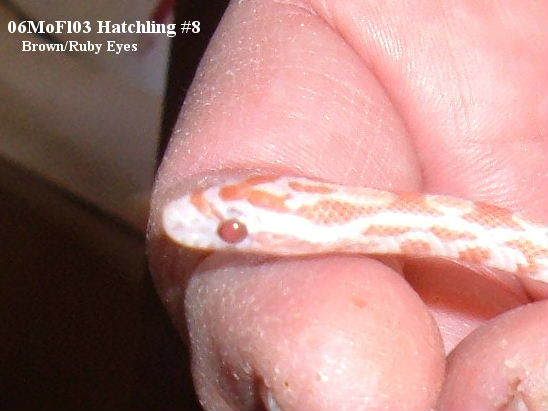
Well, I know this is an old thread, but I'm dragging it up and posting new pictures. I would value some opinions as this particular hatchling is now 6 months older. I'm still leaning towards hypomelanistic rather than the amel...why?...the eye colouration.

I also did some test breeding this year with the grandparents of this particular hatchling. Here's the genetics as I know it....

Sire of this hatchling...Amber (Molson)
Dam of this hatchling...Hypo, het caramel, ph ghost (Fleur)
Expected offspring should have been Ambers and Hypos

Fleur's genetics....from a Caramel, het hypo x Ghost pairing. The male caramel was bred to an Amel Stripe, het anery, hypo female this year. No Amels were produced. The Ghost female was bred to an Anery, het hypo,amel male in 2005 with only ghosts and anerys being produced. Doesn't appear to be any recessive amelanistic genes hidden in Fleur that I am aware of.

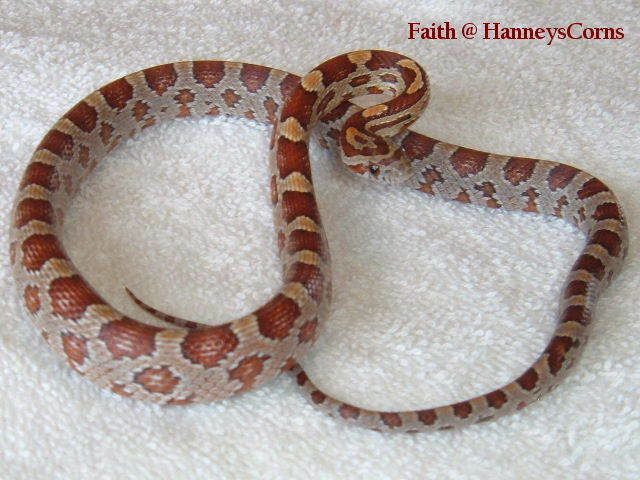
Then these 2 oddballs appear this year out of a clutch of 23 when I bred the Amber and Hypo, het caramel...a Normal, Faith, pictured below at 6 months....

Faith.jpg


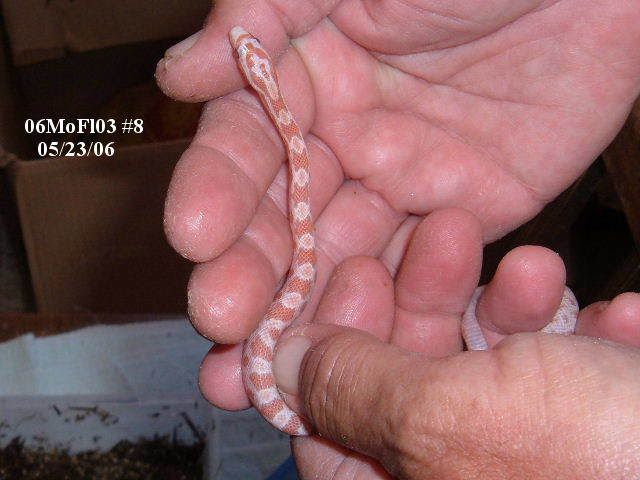
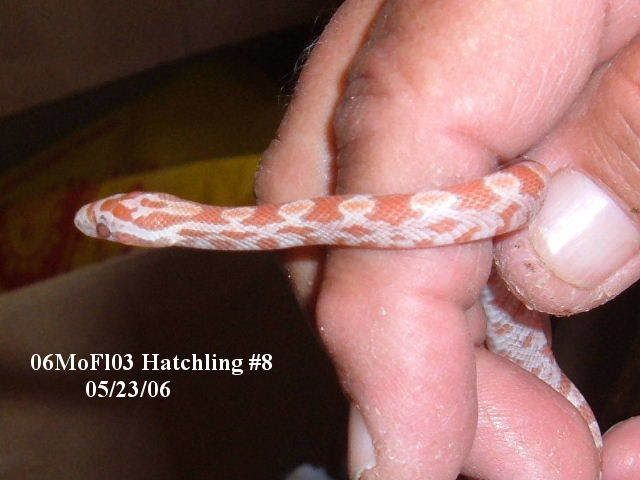
And this 'oddball', who I believed at the time to be hypo, just a little different than the other hypos in the clutch. Here's some progression pics....the first 3 are taken within hours of hatching....

2006_052306MoFl03A0018-1.jpg


2006_052306MoFl03A0016-1.jpg


2006_052306MoFl03A0017.jpg


Now, I was willing to accept the fact that maybe this was an amelanistic baby, but when the grandsire was proven 'not het amel' this year and the granddam, last year, then I really started wondering...

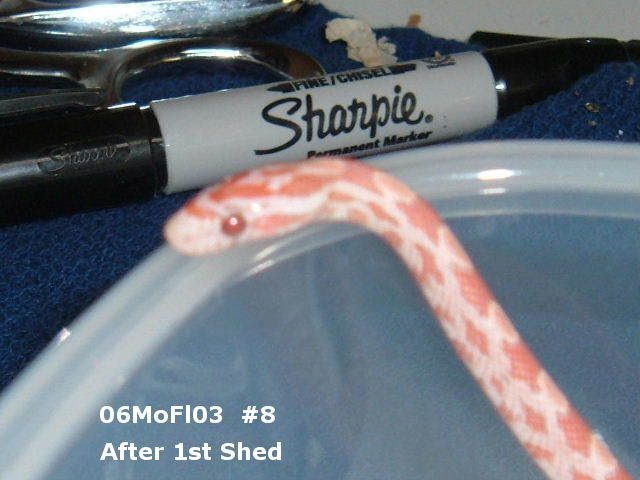
Here's a pic of her after the first shed...

2006_0527Topazeggs0006.jpg


Okay, so I'm still thinking...well, yes, could be an amel. Of course, I held both the normal and this particular hatchling back just to see the progression. I still wasn't 100% convinced this particular hatchling was amel.

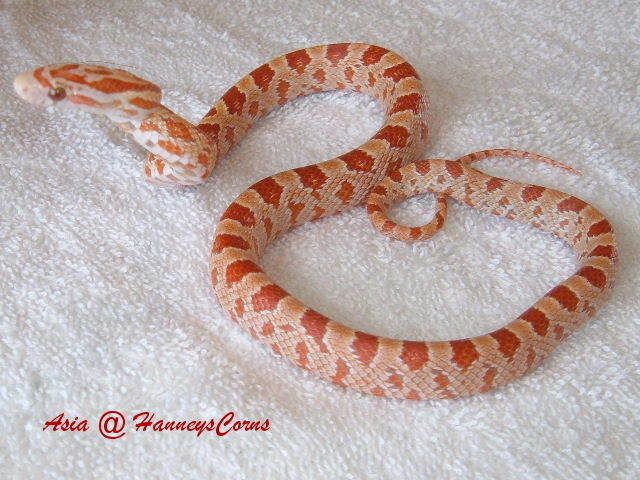
Now here's the pics taken yesterday...6 months later. "Asia" is certainly changing as you can see...

Asia.jpg


AsiaEyes.jpg


So now folks...does anyone else see 'non amel eyes'? I hatched 3 clutches of Amels this year and Asia just does not resemble any of them. I'm still leaning towards a Hypomelanistic rather than Amel with her, but please, any input would be appreciated.

Ruth
 
I'm going with the ultra theory and the amel is actually an ultramel. Figuring out the expected offspring with the amber father being het amel and the mother being a normal het ultra, hypo and caramel (I'm disregarding the het anery status as I don't think that's important in this mix), the phenotype results are:
3/16 normal
3/16 hypo
3/16 caramel
3/16 amber
1/16 ultramel
1/16 hypo ultramel
1/16 golddust
1/16 hypo golddust

The numbers don't exactly fit what hatched out...but sometimes clutches do that. Did any of the ambers look a bit different than the other ambers...like it may have been a golddust instead? And I haven't got a clue how an ultramel or golddust would look if it was also homozygous for hypo A. Would hypo A lighten up an ultramel just a touch? May explain the really light appearance of the "amel" in question as well as it not being quite "amel enough"...if you get my meaning. (It's late and my sinus medication is kicking in.)

If the mother is het ultra, there will be a bunch of future surprise clutches as 1/3 of the normal, hypo, caramel and amber babies are het ultra.
 
Thanks Susan!

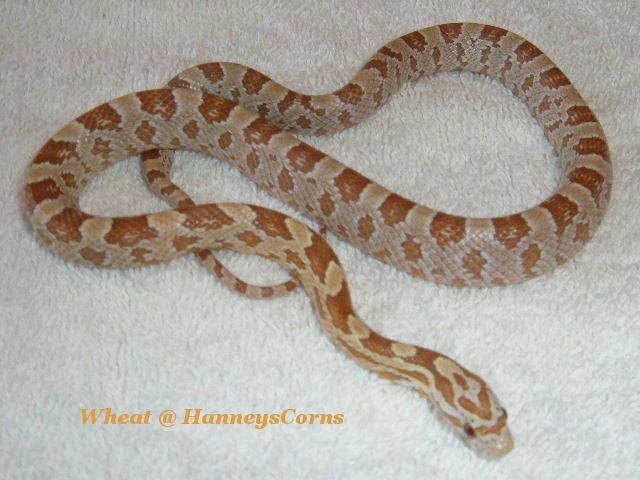
There were a total of 23 eggs in this clutch. Some of the ambers appeared very light but I assumed that was more a male/female differentiation. Here's a pic of the 1.2 I held back from the amber group...

Jasper.jpg


Wheat.jpg


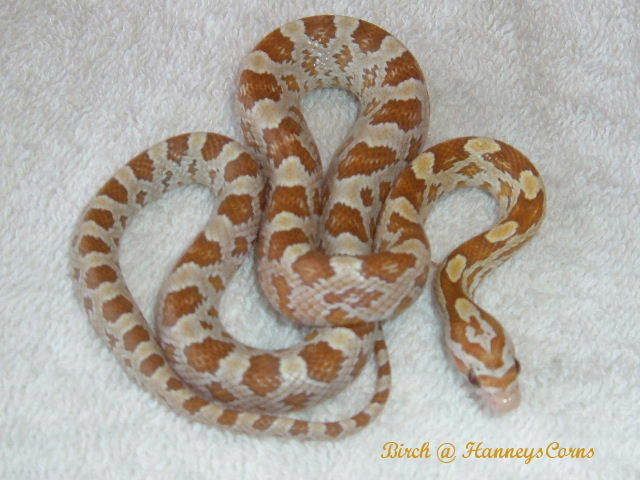
Birch.jpg


Since we produced Fleur, I can with some certainity say that there doesn't seem to be hidden amel genes in her ancestry. Molson was produced by Simon Fung and thru some contact with him I have learned that 'to his recollection' there was never any amel in his line of Ambers either.

The sire of Fleur is the snake I believe holds the key to solving this 'mystery' of odd hatchlings appearing. He is a caramel originating from U.S. stock. The folks I bought him from many moons ago told me he originally came from Glades Herps in Florida; I don't have any proof of that and I don't know if it is fact or 'just a selling tactic' they used. I purchased Ramses because I wanted a Caramel in our collection.

From his first breeding with a ghost female we produced Fleur. In that clutch there were 2 oddball hatchlings, Fleur and her sister (we have since sold Gypsy to another Canadian breeder). Both these females were much lighter in colouration and noticeably began to turn more golden in ground colour with each shed. By the time she was a yearling, I knew she was just 'different', can't explain why but her colour was so golden.

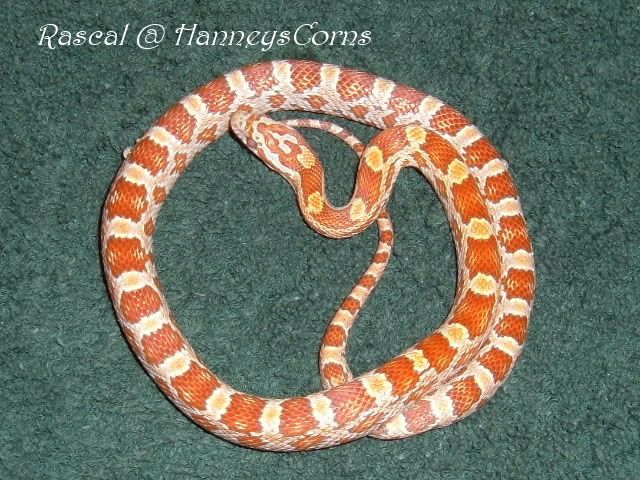
Last year, I bred Ramses with a Normal, het hypo, amel female. No amels resulted but again a couple of 'oddballs' appeared. I gifted one to another Canadian breeder who I knew would follow up on this 'mystery' and I kept one male back for myself. As he has matured, he too doesn't resemble the typical hypo A babies I am used to seeing. Here is a pic of Rascal, the odd ball from that clutch...

Rascal2.jpg


Rascal's sibling brother I also held back. Caesar shows a great resemblence to Fleur his half sister and the mother of all these hatchlings we are discussing. Here's pics of 'all the characters' involved to complete the grouping.

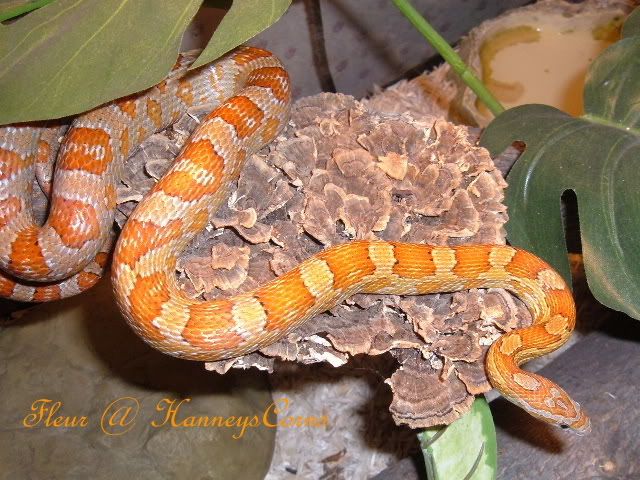
Fleur, the dam of this clutch...

ba9c9c10.jpg


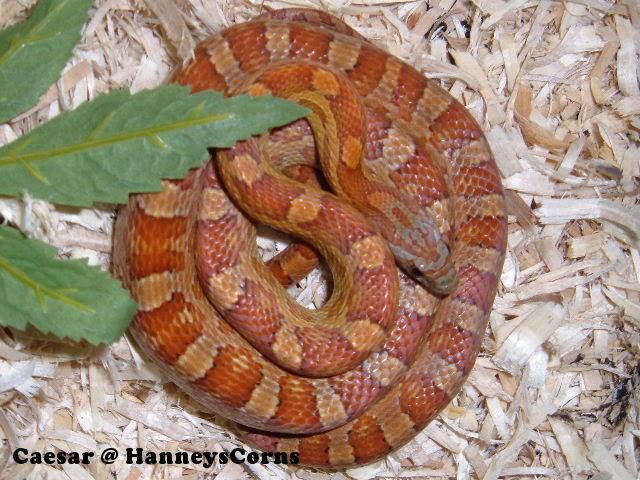
Caesar, Fleur's half brother...

2006_0502Caesar0004.jpg


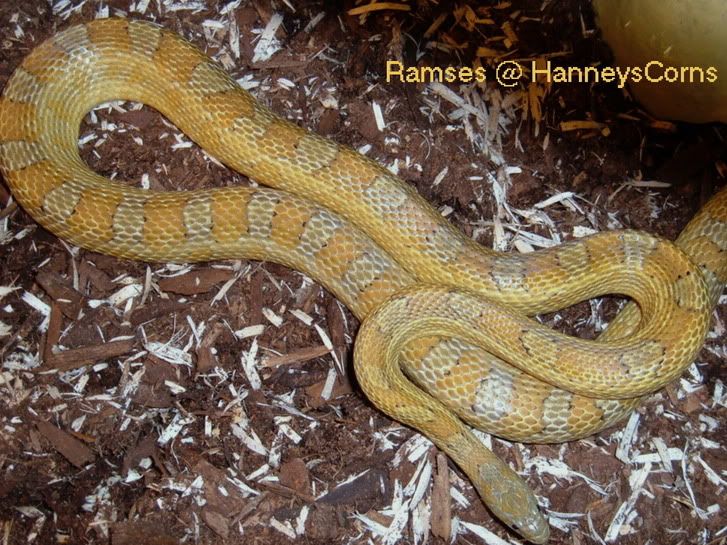
Ramses, the grandsire of the hatchlings and sire of Fleur, Casear and Rascal...

Ramses.jpg


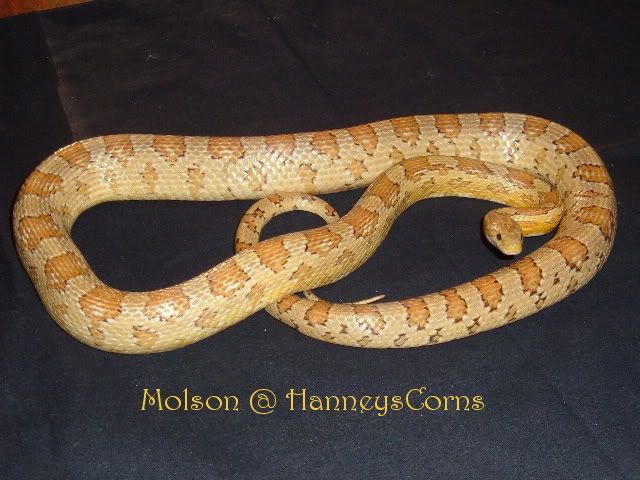
And this is Molson, the Amber who fathered the hatchlings this year...

Molson2.jpg


I have no idea what hypomelanistic genes we have in this mix. I have suspected Ultra and that can be proven (if I'm lucky) in 2008 as I have 1.1 of Ultra Mots which I can use for test breeding. I thought my next step would be to breed Ramses x Fleur in 2007 and see what results, but now I'm wondering if a better test would be to do a Rascal x Fleur pairing instead.

I'd value your input Susan on what you think would be the better pairing...my only concern with introducing either Rascal or Caesar into the mix is that both are possible hets for Amel and I think having that possibility could cause more confusion rather than helping put the pieces of the puzzle together.

All in all, some interesting genetics going on here and I believe or should I say, I hope, one day to solve the mystery.

Ruth
 
I would recommend that you test breed Ramses to an amel NOT het hypo A or caramel. You should only get normal offspring from that breeding...unless Ramses is het ultra, which would then give you amel/hypo-like offspring (about 50%). Test breeding Molson to an amel would also help determine exactly what genes are in the mix. I don't think using an amel het caramel and/or hypo with Molson would add to the confusion, and the variety of babies would be better.

I would hold off using your ultra mots as yet in any test breedings right now. There is currently some talk about some ultras actually being ultramels, and on the off chance they be one of them, or even have hypo A in them as well, it would really throw off your tests.
 
Back
Top