• Hello!

    Either you have not registered on this site yet, or you are registered but have not logged in. In either case, you will not be able to use the full functionality of this site until you have registered, and then logged in after your registration has been approved.

    Registration is FREE, so please register so you can participate instead of remaining a lurker....

    Please be certain that the location field is correctly filled out when you register. All registrations that appear to be bogus will be rejected. Which means that if your location field does NOT match the actual location of your registration IP address, then your registration will be rejected.

    Sorry about the strictness of this requirement, but it is necessary to block spammers and scammers at the door as much as possible.

Just had to show off the new additions..not a snake!

you guys should talk to your vets. glucosamine helps but in the long run they ussually need something else. ask your vet about Rimadyl (carprofen) or Metacam (meloxicam). They work wonders for some animals. not cheap though... but there's a lot of options out there and they keep coming up with new drugs that help a lot more than the old ones.
 
I prefer the Duramax over the Rimadyl. It seems to have less toxic effects on the liver, and works as well.
 
Yeah, Duramax works well too. But since you'd already mentioned it I just figured I'd throw out a couple more options. :)
 
Rimadyl's been around for a while, but I know they've had some problems with liver toxicity. I'm not familiar with Metacam.
 
Metacam is fairly new. I know some vets who swear by it and others who are only lukewarm. It doesn't always work, but when it works it seems to work really well, and we haven't seen any bad side effects from it yet. It made a couple of dogs nauseous, but then you just switch them to another drug. And yes, rimadyl can potentially cause some serious liver side effects, but so can deramax. both carprofen and deracoxib can cause severe kidney, liver and gastrointestinal problems. They are very similar drugs that work in much the same way. Dogs on these kinds of medications should always be monitored carefully. But, having said that, we have't seen any serious side effects with these. We did see a couple of dogs come in with gastric problems, but these were very old dogs who had been on rimadyl continuously for years. anyhow meg, you sound like you've done your research and are taking great care of your animals! :wavey:

 
Worked for a vet for a while, and having geriatric animals, you get info here and there. I figure by the time any sort of liver problems manifest themselves in my 13 year old lab, she'll have other age related problems. I certainly don't think the Duramax will cause her enough problems to worry about at her age. She's going to be a "nanny" for our two new pups coming in two weeks though.....I'm hoping she'll keep them in line :)
 
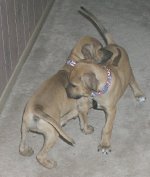
Well, they came home yesterday. Here are the little terrorists at the house. The one with the ridge is named Akilah, and the one without, is named Ona. My poor lab, and cat have not decided if the two are worth the trouble or not!
 

Attachments

  • akilahhome.jpg
    akilahhome.jpg
    47 KB · Views: 12
  • playing4.jpg
    playing4.jpg
    58.7 KB · Views: 10
hiya :wavey:

My husbands black labrador has exzema and it affects her ear too...........she has had steroids and ear drops in the past but the last few weeks she seems to be itching much more all over and her ear is too sore to touch. last time she went to the vet he said there wasnt much more than the usual treatment.... has anyone any suggestions??? apart from seeing a different vet ( which I am considering) she hurts herself with scratching.

thank you
 
oh yeah, to marg, I am only a tech and not a vet so I don't know what to tell you. maybe try a different vet? :shrugs: perhaps, someone else has some advice.
BTW what is your "usual treatment?"
 
Last edited:
Thanks! Ona has decided that emptying the cat's water bowl all over the kitchen floor is great fun. Evil little child!
Marg: My old ridgeback had allergies too. Same problems. I used to wash her ears out with ear wash, and then use a boric acid/goldbond powder mixture after they were a little dry. The boric acid can be toxic (don't inhale the powder and wash your hands after use), but it is safe to use as an ear powder. Most commercial ear powders have it in there. It dries everything real well, and the goldbond has menthol in there that gives it a cooling and itch relief property. Not much more you can do except keep the ears as clean as possible. Desitin ointment works well to heal the cuts and scratches in the ear too.
 
Back
Top