Mitchell Mulks
New member
Bummer man...
So I've been absent more than present with regards to this thread, but so goes the life of a father of four. Anyhow, lets start off with the bummer news.
I hatched out my first two-headed snake! It was alive when I slit the egg, the snake moved, so I left it alone. However, the head was hidden under it's body so I didn't realize it had two heads. Sadly, it couldn't navigate it's head out of the egg and apparently drowned in it's own amniotic fluid. NOT COOL! It was a gorgeous lavamel to boot.
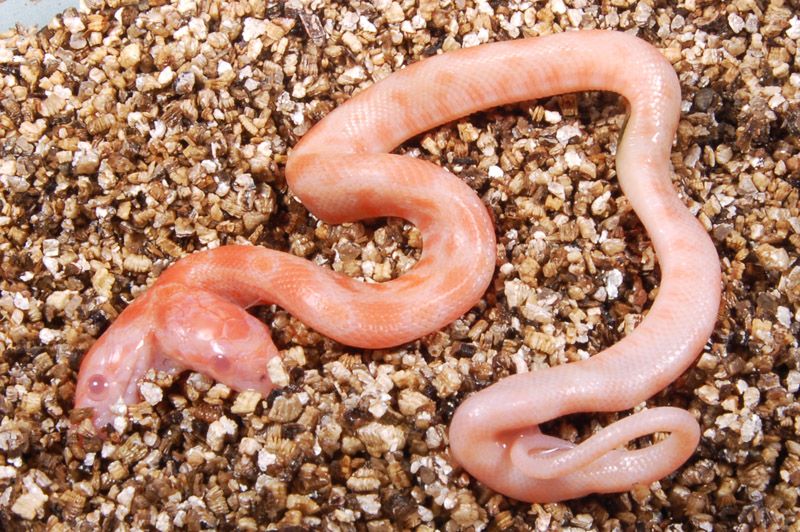
Here's two of the two-headed snake's siblings that did survive their entrance into the world; a lava and a lavamel.
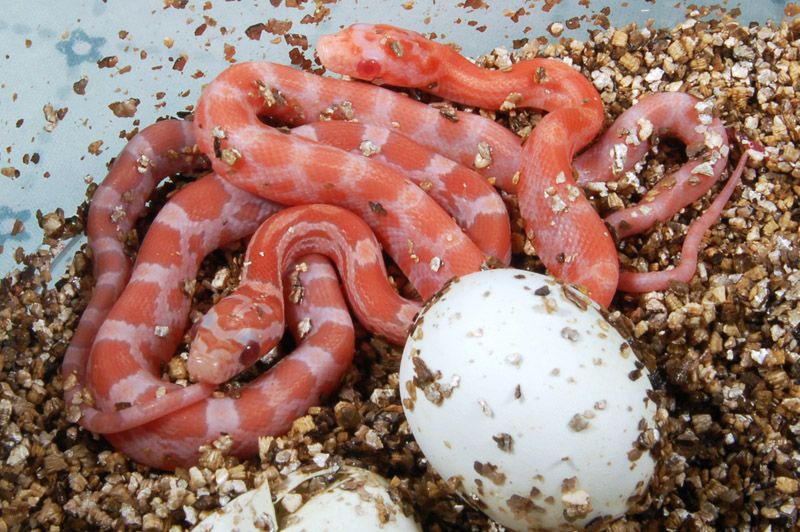
From a different clutch the goal was a lavamel stripe. Here's the realization of that goal!
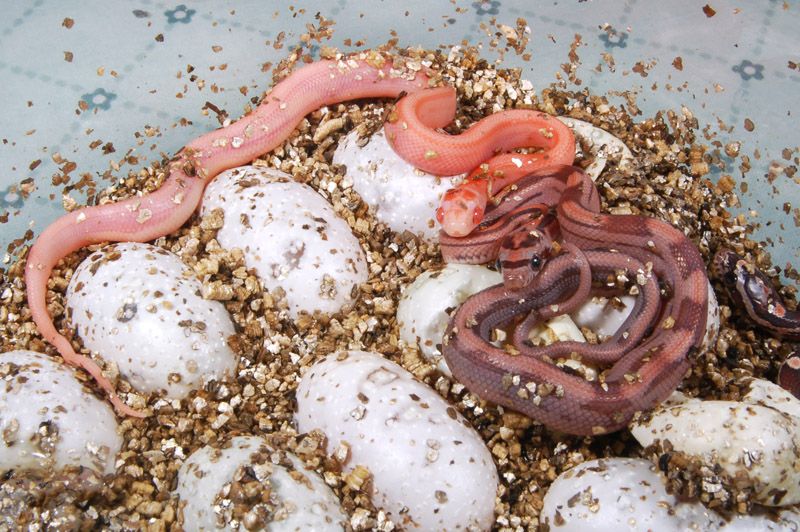
I'm very interested in the F2s from this line. This pile are all sunkissed het caramel strawberry ph motley. A strawberry honey may look no different from a lemon...but who knows, and these guys are the first step in finding out.
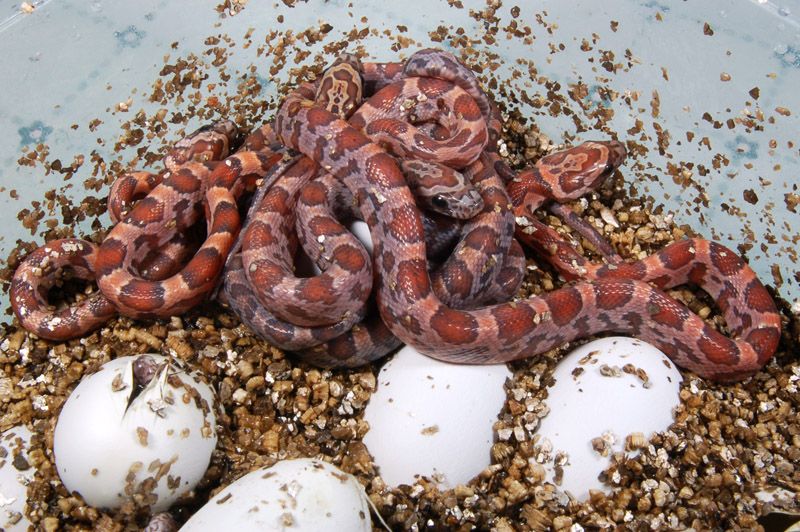
This clutch is one of a few that Carol Huddleston and I are splitting. I paired her charcoal motley with my male redcoat striped blood ph charcoal. Well, my male is definitely het charcoal. Below is a charcoal motley het blood stripe crawling around with it's motley sibs.
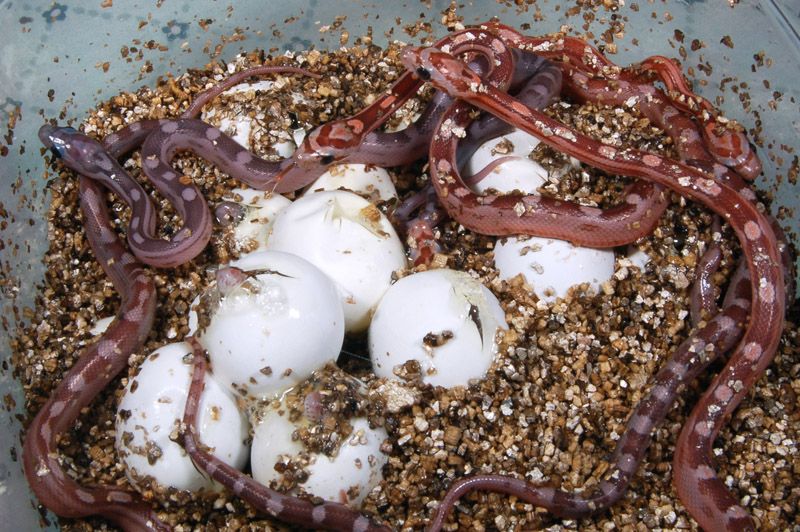
So here's hatchlings from the same pairing I've done for three years running now. The goal is a strawberry ultramel anery tessera. Last year I hatched a strawberry ultramel anery, but missed on it's tessera counterpart. This year I nailed it. The snow-looking tessera with it's snout at the top of the pic is in fact a strawberry ultramel anery tessera! If you look at the iris of the eye you can see the color, the easiest distinction at this age; all three other snow tessera are just that, snows.
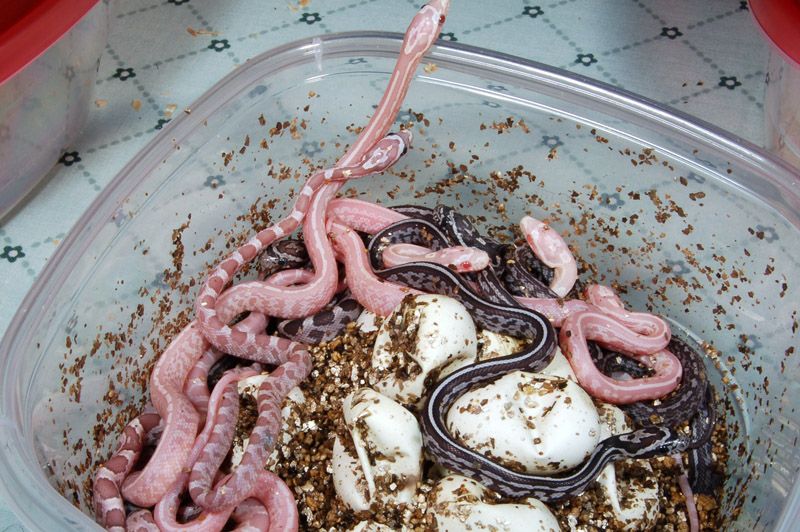
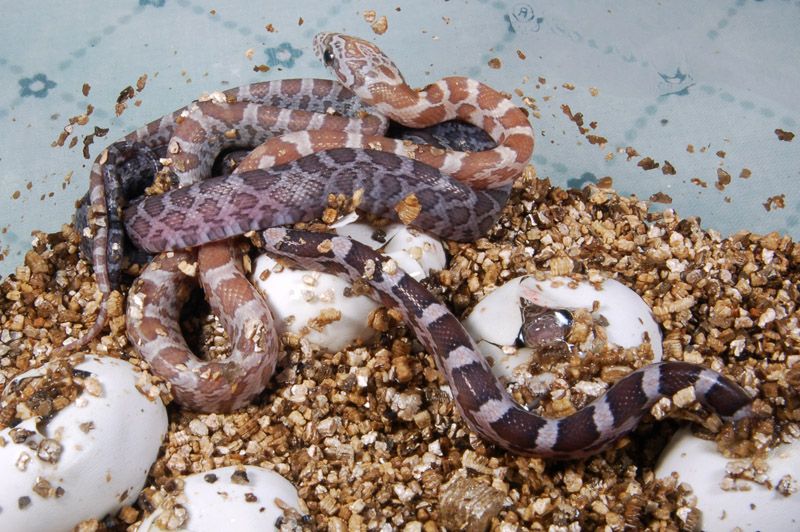
The next two pics are from a pairing of classics het amel caramel cinder motley sunkissed. Soooooooooo, because I'm red-green colorblind, the cinder gene changes oranges and reds in such a way that it's VERY difficult for me to distinguish between a caramel and a classic. Having said that, if anyone minds sharing their thoughts with me regarding two of the animals below, your opinions are very welcome.
Is this a honey motley (1/64), or a sunkissed motley (1/16)? Like I said, the cinder influence makes it very hard for me to tell.

The sunkissed-snake with the cinder...is it simply a sunkissed (1/4) or a honey (1/16)? Let me hear your thoughts.
So I've been absent more than present with regards to this thread, but so goes the life of a father of four. Anyhow, lets start off with the bummer news.
I hatched out my first two-headed snake! It was alive when I slit the egg, the snake moved, so I left it alone. However, the head was hidden under it's body so I didn't realize it had two heads. Sadly, it couldn't navigate it's head out of the egg and apparently drowned in it's own amniotic fluid. NOT COOL! It was a gorgeous lavamel to boot.
Here's two of the two-headed snake's siblings that did survive their entrance into the world; a lava and a lavamel.
From a different clutch the goal was a lavamel stripe. Here's the realization of that goal!
I'm very interested in the F2s from this line. This pile are all sunkissed het caramel strawberry ph motley. A strawberry honey may look no different from a lemon...but who knows, and these guys are the first step in finding out.
This clutch is one of a few that Carol Huddleston and I are splitting. I paired her charcoal motley with my male redcoat striped blood ph charcoal. Well, my male is definitely het charcoal. Below is a charcoal motley het blood stripe crawling around with it's motley sibs.
So here's hatchlings from the same pairing I've done for three years running now. The goal is a strawberry ultramel anery tessera. Last year I hatched a strawberry ultramel anery, but missed on it's tessera counterpart. This year I nailed it. The snow-looking tessera with it's snout at the top of the pic is in fact a strawberry ultramel anery tessera! If you look at the iris of the eye you can see the color, the easiest distinction at this age; all three other snow tessera are just that, snows.
The next two pics are from a pairing of classics het amel caramel cinder motley sunkissed. Soooooooooo, because I'm red-green colorblind, the cinder gene changes oranges and reds in such a way that it's VERY difficult for me to distinguish between a caramel and a classic. Having said that, if anyone minds sharing their thoughts with me regarding two of the animals below, your opinions are very welcome.
Is this a honey motley (1/64), or a sunkissed motley (1/16)? Like I said, the cinder influence makes it very hard for me to tell.
The sunkissed-snake with the cinder...is it simply a sunkissed (1/4) or a honey (1/16)? Let me hear your thoughts.
