• Hello!

    Either you have not registered on this site yet, or you are registered but have not logged in. In either case, you will not be able to use the full functionality of this site until you have registered, and then logged in after your registration has been approved.

    Registration is FREE, so please register so you can participate instead of remaining a lurker....

    Please be certain that the location field is correctly filled out when you register. All registrations that appear to be bogus will be rejected. Which means that if your location field does NOT match the actual location of your registration IP address, then your registration will be rejected.

    Sorry about the strictness of this requirement, but it is necessary to block spammers and scammers at the door as much as possible.

Naturalistic Leo Vivarium

EsotericForest

Night Shadow
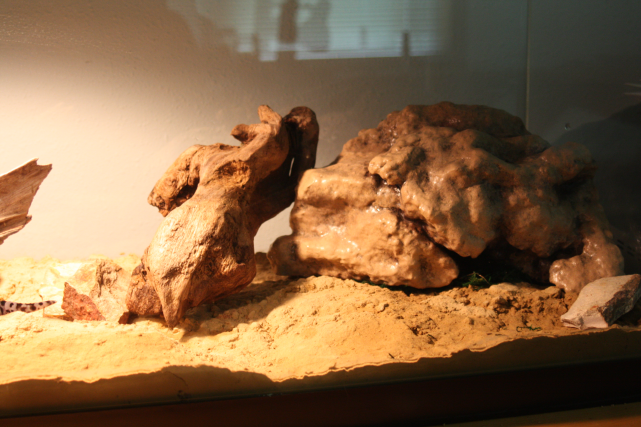
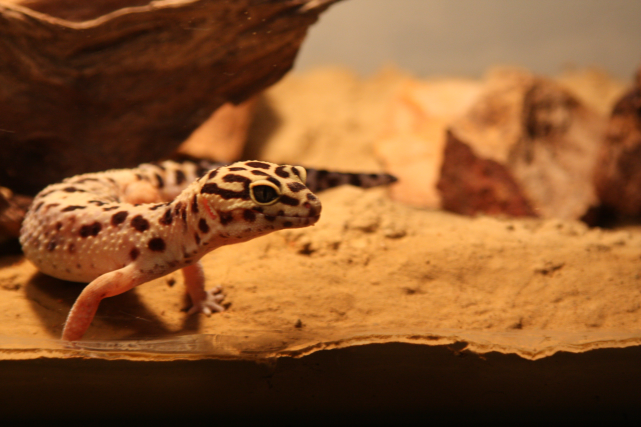
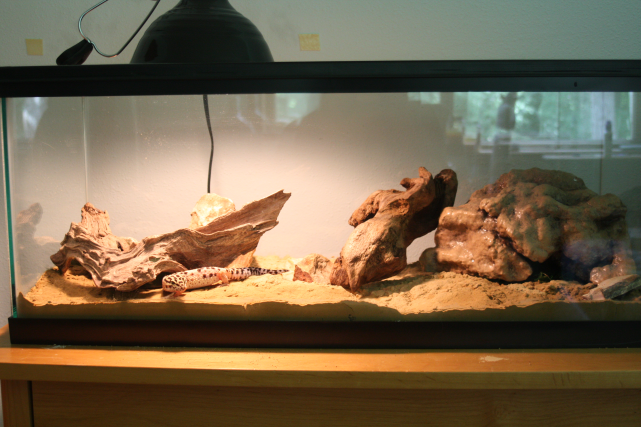
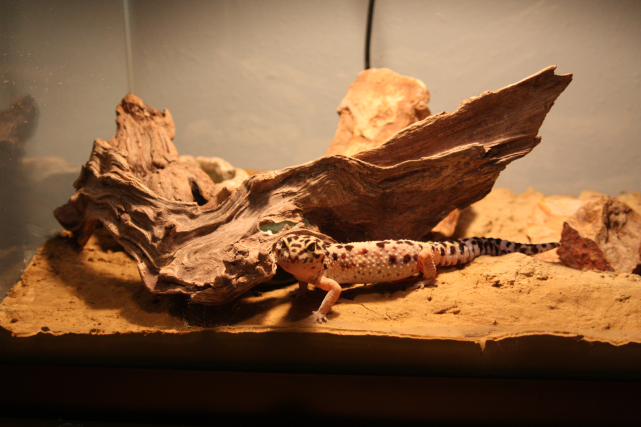
First of all, I will say that don't expect to be completely blown away. I have a bit of a modest budget at the moment, and since I'll be moving soon I don't really have the time to construct the background and such that I'd like to. I did create a humid hide though, which can be seen on the right side of the vivarium. It was my first attempt at making a polystyrene rock/hide, and I can already see some things I would like to improve on the second time around. My leo is really enjoy the vivarium so far though, which is what matters. Eventually I would like to add a modest amount of plants as well.

The substrate was a sandy clay that I collected from an area near my house. I baked it at 325F for 45 minutes on cookie sheets. I then added water to it and started placing it into the vivarium and creating a substrate. Saying it was messy would be an understatement ;). I then put lights on it and let it "bake" and dry out for around 3 days. The substrate ended up drying out almost as hard as a rock...I was actually surprised at how hard it ended up being...but since I was a little worried about impaction, I wanted something that would dry pretty hard. I wanted to recreate the region that they come from in Pakistan, where the ground is mostly hard baked clay and sand. Not the sand dunes than some people seem to think is natural for them ;).

So let me know what you think, or if there's anything I can improve on. Like I said, I can already see a couple things I'd like to change in the near future...but input from others can never hurt.
D1.png


D2.png


D3.png


D4.png


Regards,
Josh
 
I think its a nice setup. I was going to get a leopard gecko instead of a corn snake, so I resarched about leos' for a long time. I read alot about 'impaction' and never knew wich substrate was actually good for them. Im guessing your leo likes it? And I think its safe to? Once again, thats a really nice setup :)
 
I will admit that cleaning will not be a fun task. Thankfully leos are fairly clean geckos that only defecate in one area...so it shouldn't have to be completely cleaned all that often. But, as long as my leo is happy and enjoy it, then I'm willing to accept the extra hassle. My leo has been all over her vivarium and exploring ever since I put her in there. Seems pretty happy to me :).
 
I read alot about 'impaction' and never knew wich substrate was actually good for them.

It seems like everywhere you turn, somebody has something bad to say about every substrate option. It really is an irritating subject to me, which is part of the reason I decided to experiment with what I think is a more natural substrate for leopard geckos. Some people say that putting them on sand is fine as long as they're at least 6 inches long. Other people will completely flip out if you put your leo on sand. Some people will use bark, reptile carpet, newspaper, or paper towels...all of which have their down sides. I personally used walnut shell sand for my leo for the first 7 years of her life, and had absolutely no issues. But of course, I'd heard some people really freak out about the walnut shell substrate as well. Basically you can't win unless you use paper towels or something, but then it honestly just looks like crap in my opinion. I wouldn't want to live my life in a completely synthetic world.
 
It seems like everywhere you turn, somebody has something bad to say about every substrate option. It really is an irritating subject to me, which is part of the reason I decided to experiment with what I think is a more natural substrate for leopard geckos. Some people say that putting them on sand is fine as long as they're at least 6 inches long. Other people will completely flip out if you put your leo on sand. Some people will use bark, reptile carpet, newspaper, or paper towels...all of which have their down sides. I personally used walnut shell sand for my leo for the first 7 years of her life, and had absolutely no issues. But of course, I'd heard some people really freak out about the walnut shell substrate as well. Basically you can't win unless you use paper towels or something, but then it honestly just looks like crap in my opinion. I wouldn't want to live my life in a completely synthetic world.

I used sand and crushed walnut shells with my first leo for 10 years and never had any problems, but now I use paper towel just to be on the safe side. At first, I thought it looked weird, but now it doesn't bother me. I do think sand looks the best (especially the reddish brown kind) but I'm not really willing to take the risk of impaction.
 
In regards to poop clean up...

My leo has pooped three times now in her new vivarium, and all I did was let it dry out completely, and then picked it out with tweezers. It came right up with no problem. Everything still looks great :D
 
The problem with picking up the poop is that there's also liquid that comes out and settles in the substrate and breeds bacteria.
 
That setup looks so nice! I love it. <3

And the whole issue with impaction is something I take seriously. I would never keep my leo on sand or a fine grained substrate UNLESS I fed it in a separate container, which would remove the issue of impaction completely.
 
That looks great! I know nothing about leos, but if they are from a dry environment, what you have done is very good for them. I would add something green, like a succulent plant (maybe aloe, it's not poisonous and lives & thrives in anything from half sun upward and likes dry environments with infrequent heavy waterings (I water mine less than once a month and it is thriving) so you could take it out to water to keep humidity down if leos need low humidity. The styrofoam structure looks pretty darn good to me, and the baked sane/clay substrate does sound like a good compromise between avoiding impaction & providing a natural experience for the gecko. Overall, great! Do leos like to climb? Because if they do like to go up on things, the next step would be to provide an upper level of some sort.
 
That looks pretty good. I've been wanting to try the fake rock thing for my bearded dragon but I don't think it will go well lol. I get very frustrated when I'm doing something like that and it turns out like crap (which I know it probably will!) But someday I will just have to give it a try...

:cheers:
 
It is definitely a good learning experience if anything. If you enjoy DIY projects, and you have a leopard gecko...this may be worth trying.

Leopard geckos are terrestrial and really aren't very good climbers. I don't like adding much for elevation for them, since they tend to fall off things in my experience. Grace isn't high on their list of talents ;)
 
Well, then no elevated structures for leos. I did not know that. The setup does look good, like something that offers interesting terrain for the lizard to wander around in.
 
I really would like to add a little more structure and some plants eventually, and that should help spice things up. A natural rock background is also on my to do list :). But, it's a good first start.
 
Back
Top