• Hello!

    Either you have not registered on this site yet, or you are registered but have not logged in. In either case, you will not be able to use the full functionality of this site until you have registered, and then logged in after your registration has been approved.

    Registration is FREE, so please register so you can participate instead of remaining a lurker....

    Please be certain that the location field is correctly filled out when you register. All registrations that appear to be bogus will be rejected. Which means that if your location field does NOT match the actual location of your registration IP address, then your registration will be rejected.

    Sorry about the strictness of this requirement, but it is necessary to block spammers and scammers at the door as much as possible.

Normal het stripe

cornsnake234

New member
Correct me if i'm wrong, but I can see a shadow of stripe in the pattern of this little normal!!
He's only 3 months old and he's from my female amel stripe x my male hypo het moley.
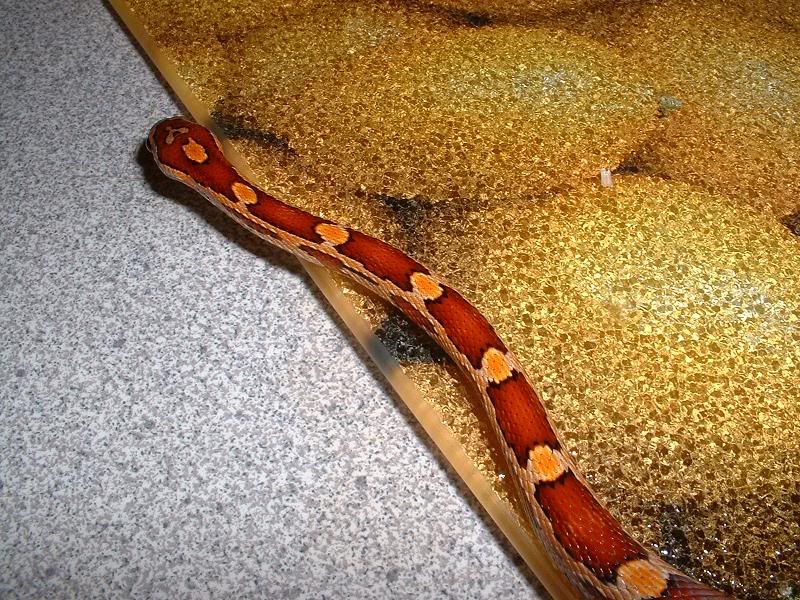
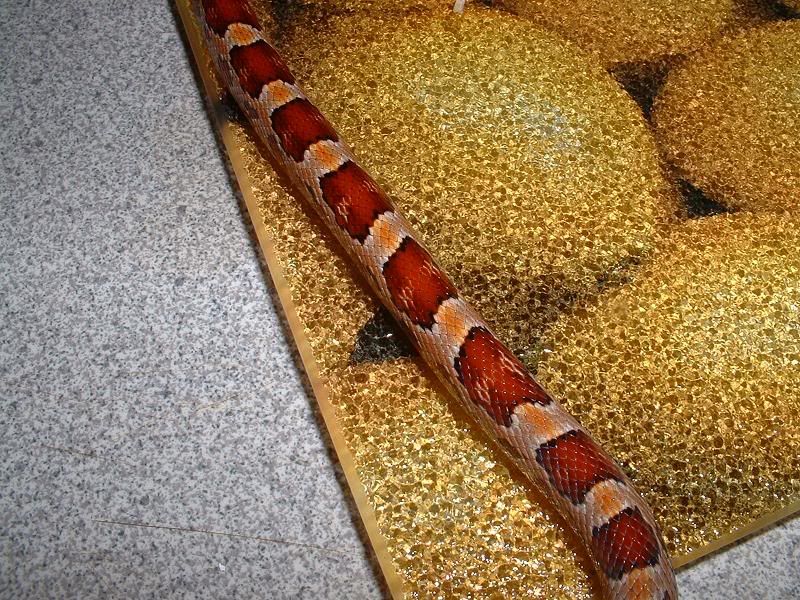
Photo012.jpg


Photo013.jpg
 
If you're referring to the orange "stripe" down the snake's spine, most normals have this. Sometimes it looks more like spots between the saddles, other times it looks like a stripe broken by the saddles. Nice looking snake. :)
 
Thanx!! ;)

But... i'm referring more to the 2 black line that are present in the neck area.... but i'm not sure if you can see it, the pic is a bit dark.
 
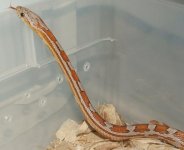
I often wonder if Treasure has genes for stripe.. he has stripes much like your little beauty.. but his are much more pronounced.. also bright yellow and dark tofee coloured... guess the best way to tell is have him make some hatchlings hehe =)
 
I don't know how much you can read into small sections of pattern anomaly. Since you know the parentage of your example (cornsnake234), maybe what you are seeing is the result of your snake being het for motley/stripe. My male ghost of unknown ancestry has a strongly stretched side pattern (stripe) for the first part of his length, but I haven't attached much significance to this in terms of possible genotype.
 

Attachments

  • 102805 gil (1).JPG
    102805 gil (1).JPG
    28.8 KB · Views: 28
Back
Top