• Hello!

    Either you have not registered on this site yet, or you are registered but have not logged in. In either case, you will not be able to use the full functionality of this site until you have registered, and then logged in after your registration has been approved.

    Registration is FREE, so please register so you can participate instead of remaining a lurker....

    Please be certain that the location field is correctly filled out when you register. All registrations that appear to be bogus will be rejected. Which means that if your location field does NOT match the actual location of your registration IP address, then your registration will be rejected.

    Sorry about the strictness of this requirement, but it is necessary to block spammers and scammers at the door as much as possible.

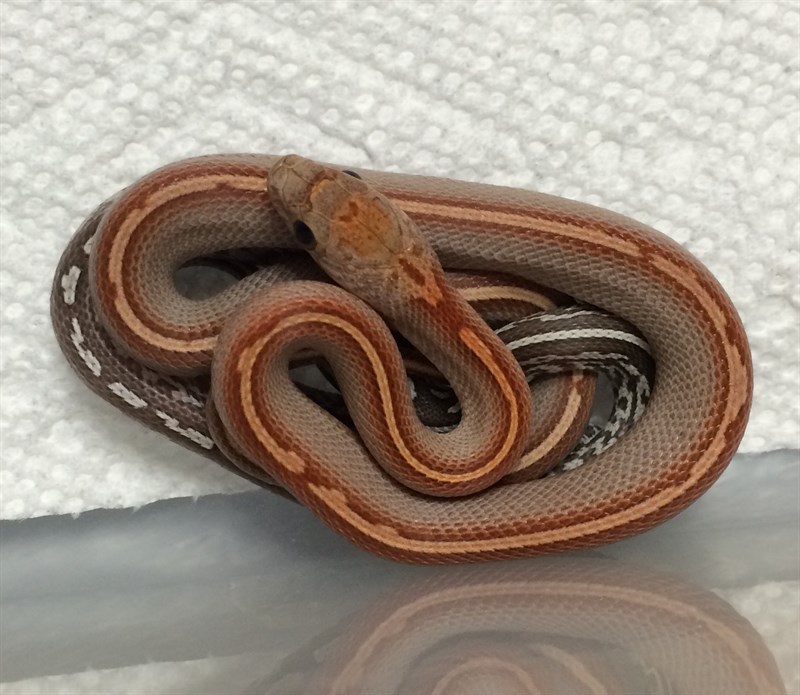
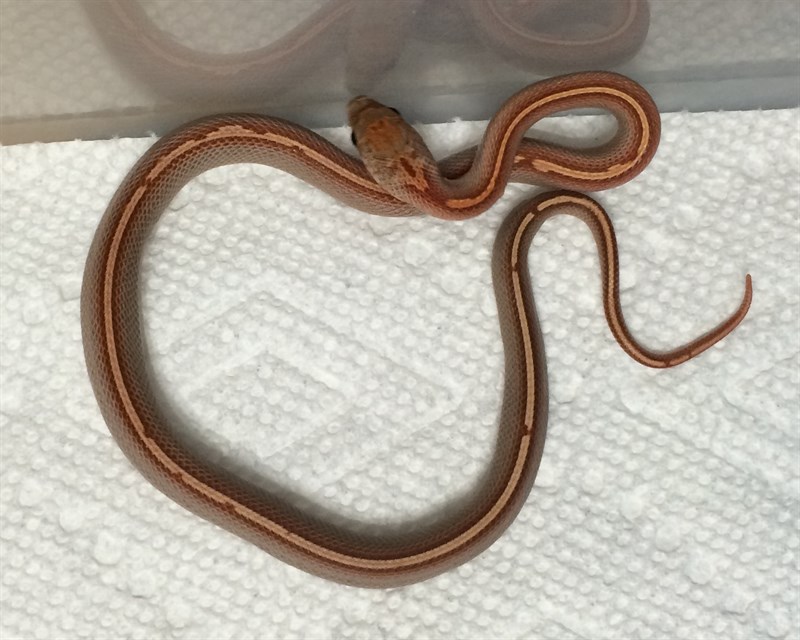
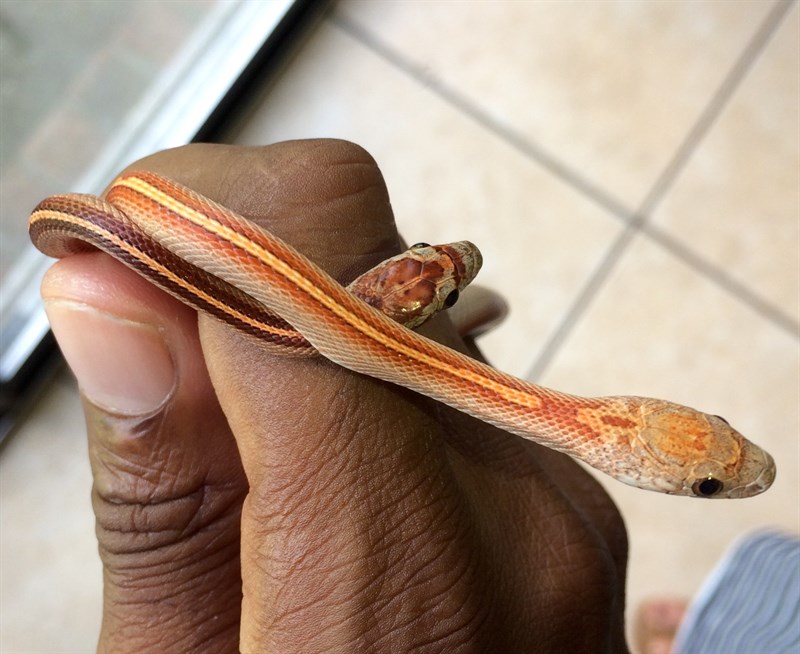
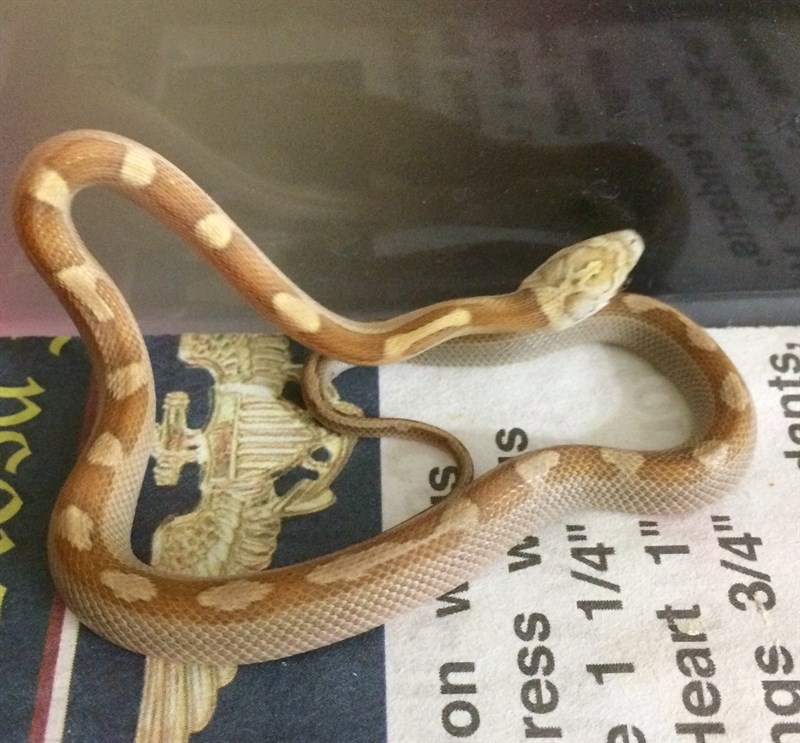
Any ideas on this hatchling???

No belly checks, so it is striped, diffused or both. Looks both.

Niklas, neither parent has diffused genes associated to it per qtken2. The likelihood of a random mutation cropping up is extremely low, but there nonetheless. And although no belly checks is a marker for both stripe and diffused, it is also a marker for motley and terrazzo. Additionally, you can have tesseras without motley, stripe, diffused, or terrazzo in their lineage and those tessera can have patterned or even patternless bellies.

That said, I agree that stripe and tessera are in play and what appears to most likely be lavender. As qtken2 stated, he is holding this one back. Hopefully it is male and maybe in 2 years he will test cross it with something like an orchid stripe, orchid het stripe, stripe het orchid, lavender het sk stripe, sunkissed het lavender stripe, or normal het orchid stripe. Any one of those pairings should start to shed light, if the odds of probability are favorable, as to what this neat looking mystery critter is.

Shoot, it might even be the orchid version of my favorite striped tessera owned by multicorn.net. Image courtesy of multicorn.net via iansvivarium.com.

tesserastripe-a.jpg
 
That said, I agree that stripe and tessera are in play and what appears to most likely be lavender. As qtken2 stated, he is holding this one back. Hopefully it is male and maybe in 2 years he will test cross it with something like an orchid stripe, orchid het stripe, stripe het orchid, lavender het sk stripe, sunkissed het lavender stripe, or normal het orchid stripe. Any one of those pairings should start to shed light, if the odds of probability are favorable, as to what this neat looking mystery critter is.

He is a male! I don't have anything outside this project to test him with but an orchid. I do plan on breeding him to a plasma tessera but that doesn't help out with the sunkissed and stripe part. I'll be looking for some things at Daytona this year as well
 
Shed Update

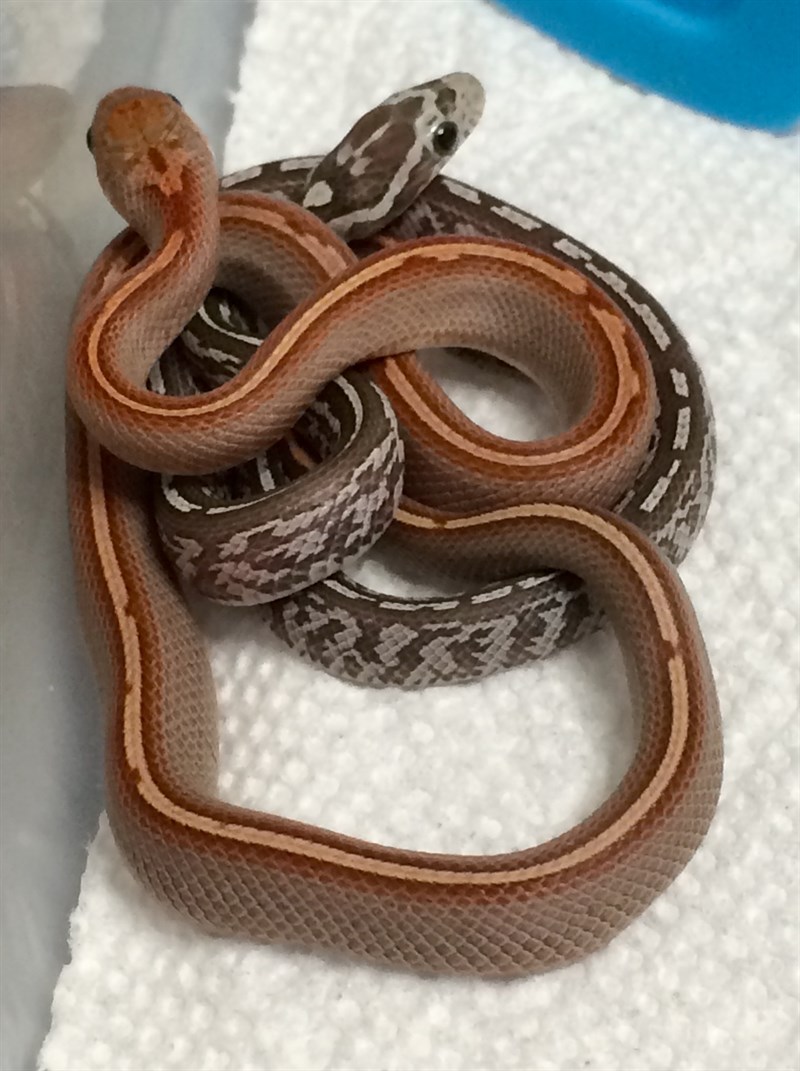
The other baby hasn't shed yet but here is next to a lavender sibling. I'll take pictures after each shed to track as well, just hope I can remember.

186602_425263_VeryLarge_SFGvylUZ2yGvU.jpg

186602_425264_VeryLarge_oEDESqDmkYTEO.jpg

186602_425265_VeryLarge_He07WbmdvI1RCO.jpg
 
I figured out what those are.... Corn snakes!

Those 2 are going to be smoke'n Ken! I think both are very likely going to look like the one I posted above owned by multicorn. I'm hoping it get similar this season as I'm more a fan of the bold stripe vs vanishing stripe.

Definitely document it. If not, I'm always game for visiting FL with my Nikon gear. :D
 
2nd Clutch hatching!

So here comes round 2 with a surprise guest appearance from "caramel"! The parents are no longer 50% possible het anymore.

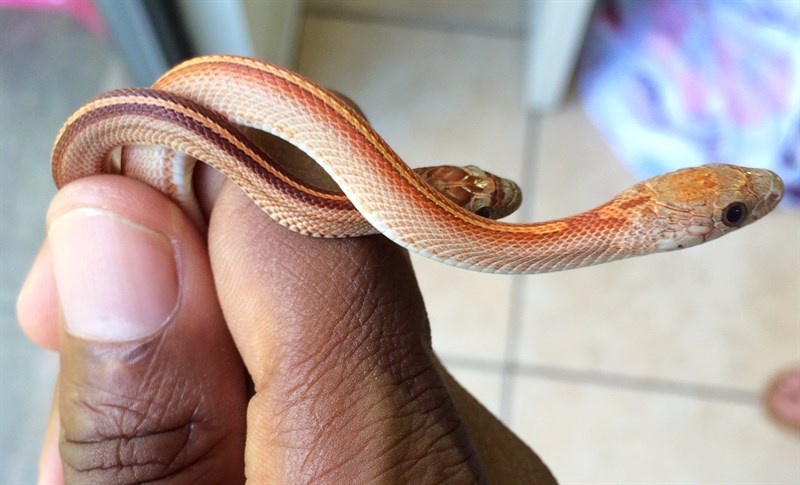
Caramel Tessera


Honey ?????? (more will be known once out)


Another head scratcher,
Lavender ????? Tessera
 
And it looks like I know know what the first hatchling is that I originally asked about: Sunkissed Tessera Motley.

This was confirmed with a motley hatching out.
 
Niklas, neither parent has diffused genes associated to it per qtken2. The likelihood of a random mutation cropping up is extremely low, but there nonetheless.

Random!?, No way. Diffused is common these days.
It is out there bred into many lines.

If the parents of that hatchlings had a diffused ancestor 3-4 generations back, do you really think the diffusion gene should or could be listed in the pos het list?

The snake have a diffused lateral pattern, it have a plain belly and a head pattern that that makes me think of bloodred.

The problem in this thread is that the pos het list of the parents do not list the diffused gene.
 
Back
Top