• Hello!

    Either you have not registered on this site yet, or you are registered but have not logged in. In either case, you will not be able to use the full functionality of this site until you have registered, and then logged in after your registration has been approved.

    Registration is FREE, so please register so you can participate instead of remaining a lurker....

    Please be certain that the location field is correctly filled out when you register. All registrations that appear to be bogus will be rejected. Which means that if your location field does NOT match the actual location of your registration IP address, then your registration will be rejected.

    Sorry about the strictness of this requirement, but it is necessary to block spammers and scammers at the door as much as possible.

Question about diffusion.

arrowhd

STL Cardinals Fan
I have an '09 Bloodred that is still quite small. He is not showing a high amount of diffusion at this point. At what approximate age/size should I start to expect to see the diffusion taking place? It would be great to see some pictures of examples from hatchling to adult if you have them.
 
The diffusion should become more apparent with each shed. That said however, the degree of diffusion can vary from snake to snake.

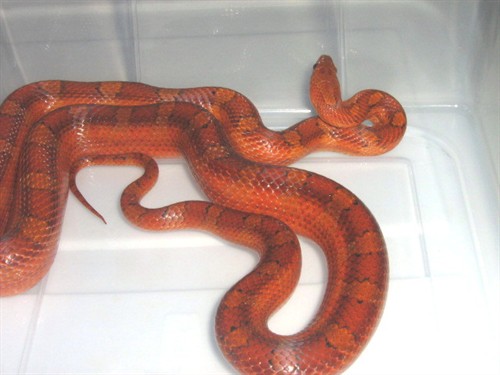
Adult bloodred

19039_33639_Large_biykyGcQneWG.jpg
 
The diffusion should become more apparent with each shed.
I understand but does a young snake with little diffusion as a hatchling have a chance to show a high level of diffusion as an adult? I know that young cornsnakes often change dramatically in appearance. Did yours show much diffusion as a hatchling?
 
The appearance of a young snake is a good indicator of what the older version will be but it is not absolute.

I assume by diffusion you are talking about the diffused pattern on the flanks. Remember that is only one of the characteristics of diffusion. Other morphs involved like color will have an effect on the final outcome.
 
Wade,
Yes I am referring to the diffusion on the flank of an animal. So my animal (bloodred) shows a very limited amount of diffusion as a young snake. I should not expect a high level of diffusion as an adult like the picture ComoxCorn posted?
 
I always try to hold back the babies with the highest diffusion...

because they will often have the best diffusion as adults. BUT - I have held back a few with low diffusion because they had genes I want, and sometimes have been very surprised with the great diffusion some of them showed as adults. So there is no way to know for sure. But I think you get higher odds by buying the high diffusion babies. Also, look at photos of the parents for a good clue to their future appearance.
 
Back
Top