-
Hello!
Either you have not registered on this site yet, or you are registered but have not logged in. In either case, you will not be able to use the full functionality of this site until you have registered, and then logged in after your registration has been approved.
Registration is FREE, so please register so you can participate instead of remaining a lurker....
Please be certain that the location field is correctly filled out when you register. All registrations that appear to be bogus will be rejected. Which means that if your location field does NOT match the actual location of your registration IP address, then your registration will be rejected.
Sorry about the strictness of this requirement, but it is necessary to block spammers and scammers at the door as much as possible.
You are using an out of date browser. It may not display this or other websites correctly.
You should upgrade or use an alternative browser.
You should upgrade or use an alternative browser.
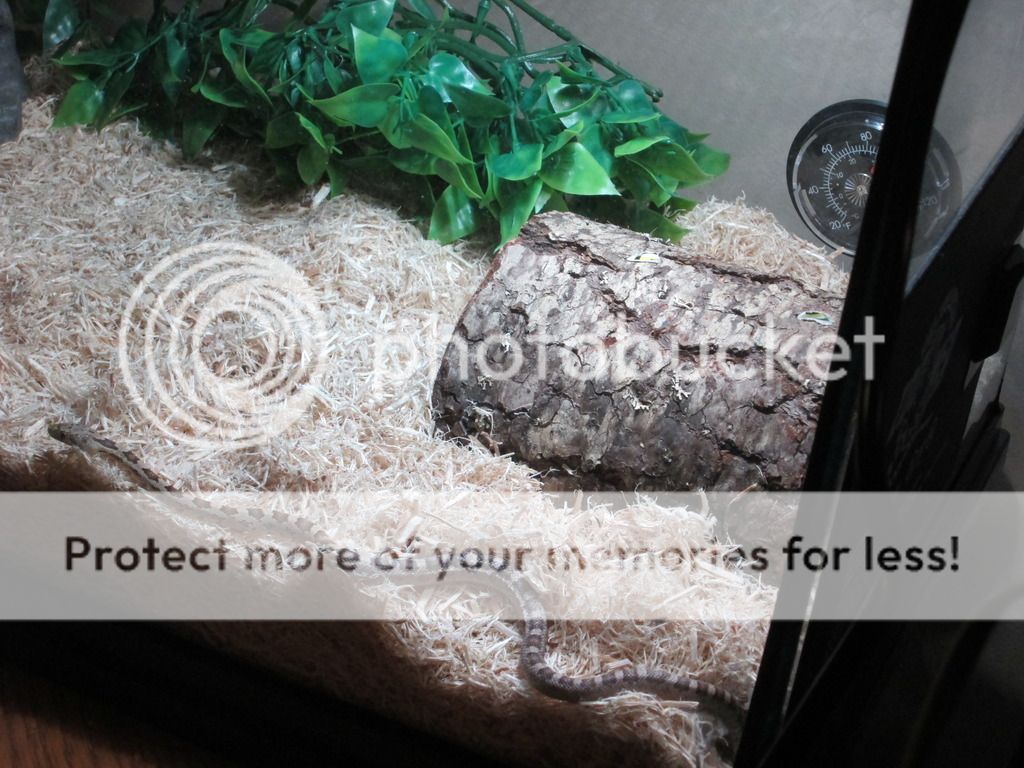
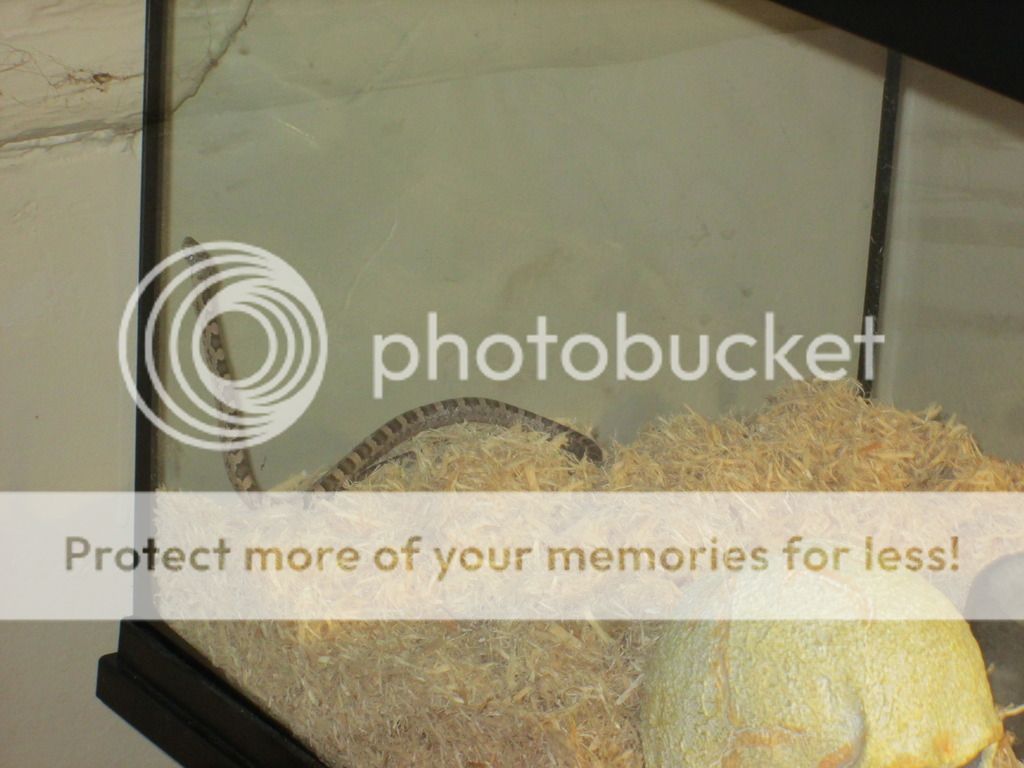
This is Mona
- Thread starter Ninabeena
- Start date


CornsAustria
New member
cute - she do not look like a pure corn from head and pattern - maybe you can take new pictures from the head later 
thank you and congrats to this beauty
thank you and congrats to this beauty

Karl_Mcknight
Common Sense Holder
Take no fear. A Corn snake and rat snake are in the same family. A corn snake used to be called "Red Rat Snake" before the term corn snake came about. And I still think you might have a Corn snake, there are so many morphs and colors now it's hard to tell. An anery corn snake would in fact look similar to a grey rat snake. But even if it is a grey rat snake, you still have a great snake, and they too make wonderful pets.
I really love my little noodle and want to be part of this community here but if she is a rat and not a corn then am I still allowed here? I'm also wondering if she will get a lot bigger than a corn if she is indeed a rat *sigh*. It upsets me that the pet store did this also.
Karl_Mcknight
Common Sense Holder
if the store told you it was a corn, and you paid for a corn, it's a corn. Just because a few people look at some pictures and then tell you "It looks like a grey rat snake" does not make it one.
I have looked at a ton of pics of the grey rat snakes and they don't have that yellow on them like Mona but I'm a total beginner. All the anery corns that I have looked at look similar to Mona but again who knows lol. I don't love her any less regardless of what she is but perhaps I may be needing a larger tank down the line instead of a 20 gal long. I guess I will just have to wait and see. I just don't want to have to leave this community.
I love reading about corns, seeing all the wonderful pics, all the wonderful stories etc. I guess a mod or admin will let me know if it's still okay to post progress pics. Thanks for the encouragement Karl.
I love reading about corns, seeing all the wonderful pics, all the wonderful stories etc. I guess a mod or admin will let me know if it's still okay to post progress pics
. Thanks for the encouragement Karl.
CornsAustria
New member
Nina - without a picture its hard because no one can see the yellow that you are talking about... pet shop is known for that, they sell animals and pets that they don't know a lot about... and why ? they don't care - for them the only important thing is to sell !
and
Karl - thats not right - I don't agree with you.
She wanted a cornsnake, but this is - when you look at the pictures not a corn, and I'm not alone with this thinking BUT a animal is a animal, and a pet is a pet and no matter what this beauty is, she deserve to stay and love by you Nina...
Stay here in this forum - rat's are in the same family like corn's
and
Karl - thats not right - I don't agree with you.
She wanted a cornsnake, but this is - when you look at the pictures not a corn, and I'm not alone with this thinking BUT a animal is a animal, and a pet is a pet and no matter what this beauty is, she deserve to stay and love by you Nina...
Stay here in this forum - rat's are in the same family like corn's
Oh she will definitely have a forever home with me. I love her to death and my son loves me so much that he spent his time and hard earned money to give his mommy something she really wanted even if it's not truly a corn. Of course I will not tell him this because it will truly break his heart so it's our secret lol. I will try to get some more pics this weekend closer up when I take her out for handling time. I'm just glad that I get to stay here and continue learning about these amazing lovelies. I am definitely not upset if she turns out not to be a true corn. I am upset with the pet store if they did this.
Now of course I live in Canada so could it be that the pet shops here consider all rat snakes to be corns and also the other way around? That could very well be and if so then I really can't fault them for that. If on the other hand they truly did know that it's not a corn and sold it as such then they are in the wrong. I know I will never get another from them again that's for sure. I do thank everyone for helping me with this as I was very confused.
Now of course I live in Canada so could it be that the pet shops here consider all rat snakes to be corns and also the other way around? That could very well be and if so then I really can't fault them for that. If on the other hand they truly did know that it's not a corn and sold it as such then they are in the wrong. I know I will never get another from them again that's for sure. I do thank everyone for helping me with this as I was very confused.

Shiari
Blutterer
Karl. The almost complete lack of head pattern and the peaked saddles are not corn snake traits in any morph. Op, if the snake is getting yellow, it could be instead a yellow rat snake. The only difference in care is they are more arboreal than corns and they also get quite a bit larger.
Karl_Mcknight
Common Sense Holder
Rat or Corn. Both!
I still say You have a corn snake Ninabeena. Don't worry about it. Most of these folks wouldn't know the difference between a corn snake and a football bat anyway.
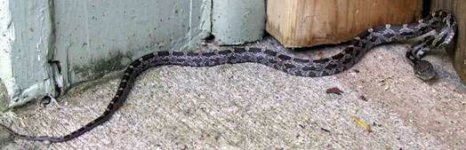
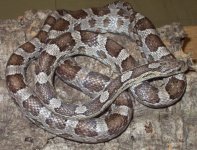
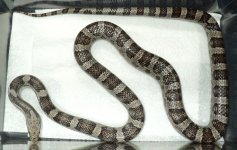
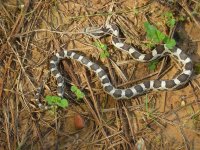
I am enclosing 4 pictures with this post. All 4 of them look similar to your snake. 2 of them are corn snakes, 2 of them are grey rat snakes. This is why people sometimes get confused.
I still say You have a corn snake Ninabeena. Don't worry about it. Most of these folks wouldn't know the difference between a corn snake and a football bat anyway.
I am enclosing 4 pictures with this post. All 4 of them look similar to your snake. 2 of them are corn snakes, 2 of them are grey rat snakes. This is why people sometimes get confused.
Attachments

Nanci
Alien Lover
I'd like to see better head pics, too. The proximal saddles REALLY stand out to me.
You know, biologists call cornsnakes red rats.
Grey rats = most lovable ratsnake of all. Wild adults are often puppy dog tame.
Black rats = also super cool. I took a wild adult on a MTB ride once, to catch up with friends. He did not care.
Yellow rats = like to get in people's houses, may be bitey, but tame down and are cool.
Red rats = most popular pet snake ever, for a reason.
Texas rats = maybe crabby AF, but might be nice.
And that is my ratsnake experience.
You know, biologists call cornsnakes red rats.
Grey rats = most lovable ratsnake of all. Wild adults are often puppy dog tame.
Black rats = also super cool. I took a wild adult on a MTB ride once, to catch up with friends. He did not care.
Yellow rats = like to get in people's houses, may be bitey, but tame down and are cool.
Red rats = most popular pet snake ever, for a reason.
Texas rats = maybe crabby AF, but might be nice.
And that is my ratsnake experience.

CornsAustria
New member
I go absolutley with Nanci and Shiari !
The 4 pics are not heavy to differe when you got a little knowlegde !!
I make this whole cornsnake thing since 2007 and with time comes knowledge, I never say that I know everything but that I know NOTHING like you SAID thats rude and its not the truth !
The pictures from Nina are not the best, but you can definetley see that the head is different and the saddles are too...
It makes me sad and angry that some people think they have eaten their knowledge with spoon's
The 4 pics are not heavy to differe when you got a little knowlegde !!
I make this whole cornsnake thing since 2007 and with time comes knowledge, I never say that I know everything but that I know NOTHING like you SAID thats rude and its not the truth !
The pictures from Nina are not the best, but you can definetley see that the head is different and the saddles are too...
It makes me sad and angry that some people think they have eaten their knowledge with spoon's
Shiari
Blutterer
I have made a handy dandy picture comparing 8 north american rat snake head patterns and saddle patterns. I'm sorry that the yellow rat is a bit older than the others. People apparently don't like to post clear pictures of baby yellow rats. But it's still clear enough.
1 & 2- Typical corn snake head pattern and saddle pattern. Note the complete central pattern that is typically present unless there is a pattern modifying gene present such as masque, stripe, or sunkissed. Of which the OPs snake is not one of. Also note the generally rounded bottom edge of the saddle. This is fairly typical but saddle edges can be more square, uneven, or slightly peaked in non-banded individuals.
3&4- Black rat. Note the near absence of the central part of the head pattern and very narrow brow band. Also note the strong downward peak to the saddles. There is of course variation, but this is typical.
5&6- Gray rat snake. Almost absent head pattern. Saddles small, spaced far apart, and deeply scalloped.
7&8- Yellow rat. Almost absent head pattern. Saddle margins deeply scalloped and pointed.
9&10- Baird's rat snake. Brow band present. Central pattern mostly absent but better defined than on a black rat. Saddles are very narrow.
11&12- Emoryi rat snake. Head pattern and saddles are very much like a corn. However, head pattern typically extends onto the neck, often resulting in a couple paired blotches of saddles.
13&14- Texas rat snake. Brow band present, but central head pattern primarily absent. Saddles are similar to corn with a slight downward peak. There is variation, but this is typical.
15&16- Eastern Fox Snake. Present head pattern, but unlike that seen on corns. Saddles are broad and often squared off, frequently alternating with the lateral patterning in an almost checkerboard fashion.
Now. The snake posted by Ninabeena is lacking most of the head pattern, and has rather strongly scalloped edges to the saddles, especially on the first third. These saddles and the head pattern most closely match that of the gray rat, and the yellow rat. However, as Nina said that it's getting yellow, that rules out the gray rat leaving the yellow rat snake as the most likely species of this snake.
1 & 2- Typical corn snake head pattern and saddle pattern. Note the complete central pattern that is typically present unless there is a pattern modifying gene present such as masque, stripe, or sunkissed. Of which the OPs snake is not one of. Also note the generally rounded bottom edge of the saddle. This is fairly typical but saddle edges can be more square, uneven, or slightly peaked in non-banded individuals.
3&4- Black rat. Note the near absence of the central part of the head pattern and very narrow brow band. Also note the strong downward peak to the saddles. There is of course variation, but this is typical.
5&6- Gray rat snake. Almost absent head pattern. Saddles small, spaced far apart, and deeply scalloped.
7&8- Yellow rat. Almost absent head pattern. Saddle margins deeply scalloped and pointed.
9&10- Baird's rat snake. Brow band present. Central pattern mostly absent but better defined than on a black rat. Saddles are very narrow.
11&12- Emoryi rat snake. Head pattern and saddles are very much like a corn. However, head pattern typically extends onto the neck, often resulting in a couple paired blotches of saddles.
13&14- Texas rat snake. Brow band present, but central head pattern primarily absent. Saddles are similar to corn with a slight downward peak. There is variation, but this is typical.
15&16- Eastern Fox Snake. Present head pattern, but unlike that seen on corns. Saddles are broad and often squared off, frequently alternating with the lateral patterning in an almost checkerboard fashion.
Now. The snake posted by Ninabeena is lacking most of the head pattern, and has rather strongly scalloped edges to the saddles, especially on the first third. These saddles and the head pattern most closely match that of the gray rat, and the yellow rat. However, as Nina said that it's getting yellow, that rules out the gray rat leaving the yellow rat snake as the most likely species of this snake.