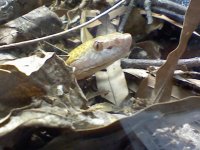
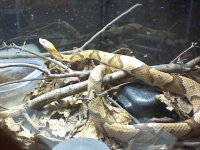
Oooh, look! We even have regulations for caging non-venomous reptiles and amphibians!
F.A.C. 68A-6.004: Standard Caging Requirements for Non-Venomous Retiles:
1) Snakes and glass lizards: In addition to requirements for this section, each
enclosure shall be provided with an environment or devices that allow for
temperature regulation necessary to insure the well being of the species. The
environment or devices shall be non-injurious, and may include, but not limited to
hot rocks, artificial lights, natural sunlight and heat strips. Each enclosure shall be
provided with a non-injurious substrate such as newspaper, processed wood
shavings, rocks, sand, or indoor-outdoor carpet.
Such substrate shall be disposed of or sanitized at intervals sufficient to insure the
health of the animal(s). Enclosure size for all snakes and glass lizards shall be based
upon the length of the longest specimen in the enclosure. For up to two specimens,
the width of the cage shall not be less then 20 percent of the length of the longest
specimen. The width of the enclosure shall not be required to exceed three feet. For
each additional specimen, increase perimeter by ten percent.
2) Lizards (other than glass lizards): In addition to requirements of this section, each
enclosure shall be provided with an environment or devices that allow for
temperature regulation necessary to ensure the well-being of the species. The
environment or devices shall be non-injurious, and may include but is not limited to
hot rocks, artificial lights, natural sunlight and heat strips. Each enclosure shall be
provided with a non-injurious substrate such as gravel, newspaper, processed wood
shavings, rocks, sand, or indoor-outdoor carpet. Such substrate shall be disposed of
or sanitized at intervals sufficient to ensure the health of the animal(s).
(I) Lizards up to 6 inches in length: For one or two lizards, a cage 12 inches
by 8 inches, 6 inches high. For each additional lizard, increase size by one
inch in length and width.
(II) Lizards 7 to 12 inches in length: For one or two lizards, a cage 20 inches by
10 inches, 12 inches high. For each additional lizard, increase size by two
inches in length and width.
(III) Lizards 13 to 24 inches in length: For one or two lizards, a cage 30 inches
by 12 inches, 12 inches high. For additional lizard, increase enclosure size
by three inches in length and width.
(IV) Lizards 25 to 36 inches in length: For one or two lizards, an enclosure 36
inches by 12 inches, 16 inches high. For each additional lizard, increase
enclosure size by 10 inches or 25 percent in length and width.
(V) Lizards 37 inches to 6 feet in length: For one or two lizards, an enclosure 6
feet by 3 feet, 4 feet high. For each additional lizard, increase the enclosure
by 25 percent of the original floor area.
(VI) Lizards over 6 feet in length: For one or two lizards, an enclosure 9 feet by
6 feet, 4.5 feet high. For each additional lizard, increase the enclosure by 25
percent of the original floor area.
3) Turtles (other than tortoises and box turtles): In addition to the requirements of
this section, each enclosure shall be provided with an environment or devices that
allow for temperature regulation necessary to ensure the well being of the species.
The environment and devices shall be non-injurious, and may include, but are not
limited to artificial lights and natural sunlight. Each enclosure shall be provided with
a non-injurious substrate, such as gravel, rocks, or sand. Each enclosure shall have a
pool of water that will allow submersion of the largest turtle. For soft-shelled turtles,
a non-abrasive pool bottom is required. Enclosure size for all turtles shall be based
up on the size of the largest specimen in the enclosure.
For one or two turtles, an enclosure with an area at least five times the shell length,
by two times the shell width of the largest turtle. The pool area shall be no less than
two times the shell width, by two times the shell length of the largest turtle. A dry
resting area equal to the size of the shell of the largest turtle shall be provided. For
each additional specimen, increase original floor and pool area by 10 percent.
4) Tortoises and box turtles: In addition to the requirements of the this section, each
enclosure shall be provided with an environment or devices that allow for
temperature regulation necessary for the well being of the species. The environment
and devises shall be non-injurious and may include, but not limited to, artificial light
and natural sunlight. Each cage shall be provided with a non-injurious substrate,
such as gravel, rocks, newspaper, sand or indoor-outdoor carpet. Such substrate
shall be kept clean.
Enclosures sizes for all tortoises and box turtles shall be based upon the size of the
largest specimen in the enclosure.
For one or two tortoises, or box turtles, an enclosure with a floor area 10 times the
shell size of the largest specimen in the enclosure. For additional specimens, the
floor area available for movement shall be twice the floor area covered by the
combined body mass of all the animals in the enclosure.
5) Amphibians: Aquatic amphibians shall be kept in water filled tanks, or aquaria. Semiaquatic
amphibians shall be kept in enclosures, tanks, or aquaria, with a water area and a
dry area that shall permit moving and turning. Both the dry area and the water area shall
provide room to accommodate all animals in the enclosure simultaneously.
6) Crocodilians: For one animal, an enclosure of sufficient size to permit moving and
turning both on a dry area in a pool of water the water being of sufficient depth to permit submersion. For additional animals, the combined area covered by all their bodies shall not exceed 50 percent of the enclosure area.



 )
)