-
Hello!
Either you have not registered on this site yet, or you are registered but have not logged in. In either case, you will not be able to use the full functionality of this site until you have registered, and then logged in after your registration has been approved.
Registration is FREE, so please register so you can participate instead of remaining a lurker....
Please be certain that the location field is correctly filled out when you register. All registrations that appear to be bogus will be rejected. Which means that if your location field does NOT match the actual location of your registration IP address, then your registration will be rejected.
Sorry about the strictness of this requirement, but it is necessary to block spammers and scammers at the door as much as possible.
You are using an out of date browser. It may not display this or other websites correctly.
You should upgrade or use an alternative browser.
You should upgrade or use an alternative browser.
albino corn photo gallery
- Thread starter solrwind
- Start date


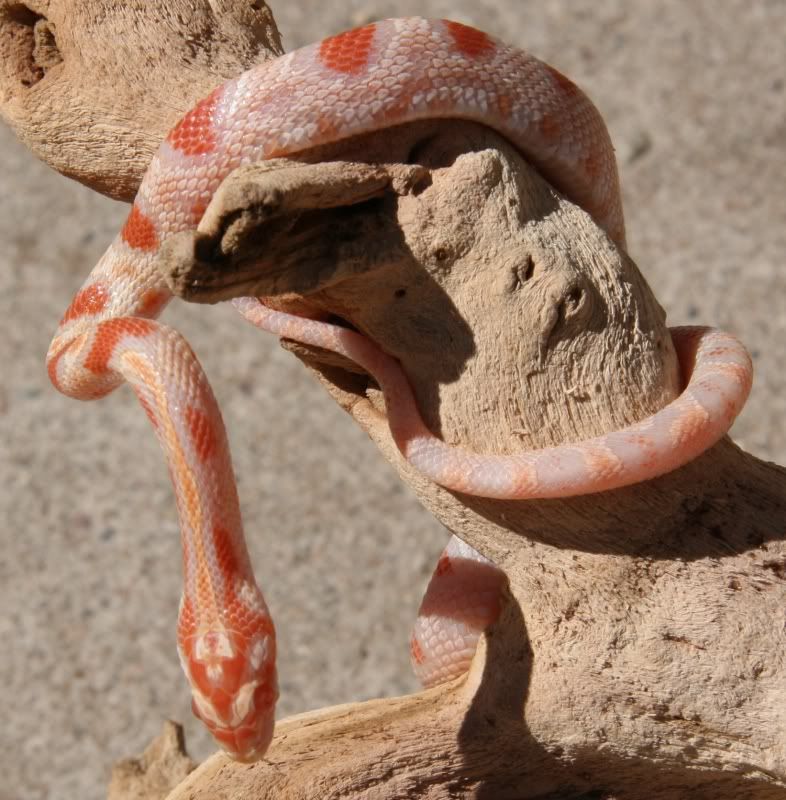
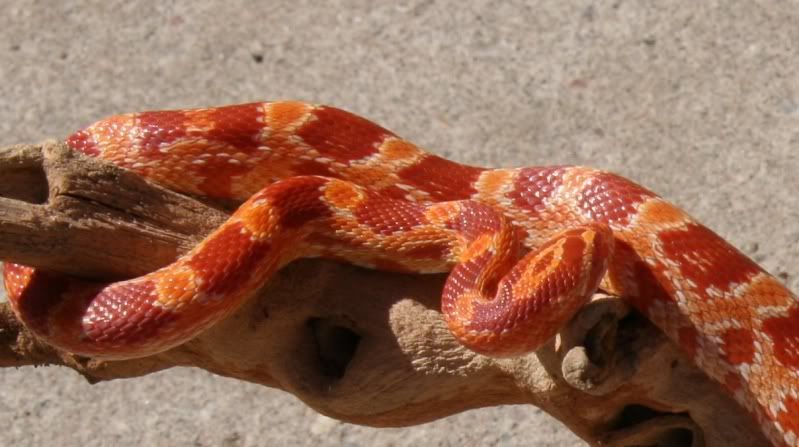
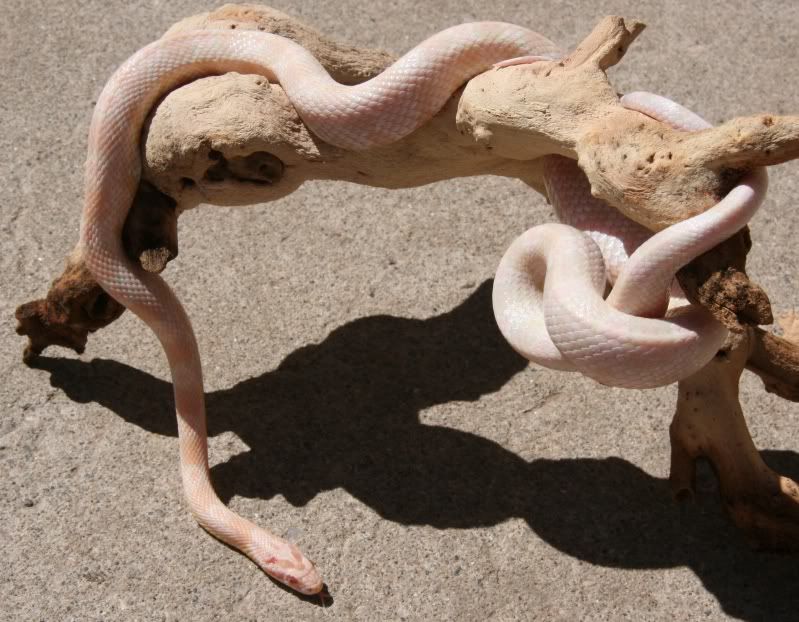
Here's my Wilma (she was about 7 months old here):

And here's a more recent picture of her:

And then here's my little sister's amel stripe, Popsicle:

And here's a more recent picture of her:
And then here's my little sister's amel stripe, Popsicle:

bitsy
Owned by Corns since 1991
In "Normal" or wild-type Corns, there are three pigments at play - black, red and yellow.the definition of albino is that it has less color pigment than normal so would a black albino or an amel have more pigment
Anerythristic Corns lack red and yellow and are therefore shades of black and grey. There are genetically different forms of Anerythrism as well - each has a different morph name.
Amelanistic Corns lack black and yellow and are therefore shades of pink and red - although they can moe towards oranges in some bloodlines.
Snow Corns lack red, yellow and black and are therefore white/pink. There are other white Corns morphs as well.
All are forms of albinism, which is why it's better to use the morph or trade name with Corns, rather than "albino" which can mean one of a range of things.
bitsy
Owned by Corns since 1991
It does come through doesn't it? Hence the orangy shades of Amel and the yellowy blush some Anerys get on their throats - Snows too and they're definitely lacking all pigments to begin with. But still, that's the basic theory of albinism in Corns as I understand it.
All good reasons not to use the word "albino" but to be more specific.
All good reasons not to use the word "albino" but to be more specific.

Tara80
ACR Breeder # 787
Nanci, the yellow on the throats on aneries, amels, etc is different. It's not due to a naturally born on/off pigmentation gene.
It's due to the food source the animal eats and is from carotenoid retention.
Here's a good read on it: http://en.wikipedia.org/wiki/Carotinoid
It's due to the food source the animal eats and is from carotenoid retention.
Here's a good read on it: http://en.wikipedia.org/wiki/Carotinoid

Nanci
Alien Lover
Nanci, the yellow on the throats on aneries, amels, etc is different. It's not due to a naturally born on/off pigmentation gene.
It's due to the food source the animal eats and is from carotenoid retention.
Here's a good read on it: http://en.wikipedia.org/wiki/Carotinoid
How do you know? Can you cite references?
And why do some snakes in a collection all being fed the same diet exhibit no yellow?
(And I'm familiar with carotenoids).

beautifullywild77
Go Penguins!!!
Again solrwind... you are not going to get far with an attitude. I still don't see any pictures of yours????
My reverse okeetee Lilbit
My amel Eve
My snow Piglet
My reverse okeetee Lilbit
My amel Eve
My snow Piglet
Tara80
ACR Breeder # 787
How do you know? Can you cite references?
And why do some snakes in a collection all being fed the same diet exhibit no yellow?
(And I'm familiar with carotenoids).
I think it's the development of the yellow and the understanding of amel and anery themselves (loads and loads of genetic information out there about this just via google).
It's on Don's site and VMS herp, specific to these snakes though.
I guess it's just one of those fully excepted things but you're probably right, that more research or, at least, publishing should be done based on this.
I agree, why is charcoal and cinder prone to not have the problem but anery does.

Susan
Go Ahead, Make My Day!
Nanci, the yellow on the throats on aneries, amels, etc is different. It's not due to a naturally born on/off pigmentation gene.
It's due to the food source the animal eats and is from carotenoid retention.
Here's a good read on it: http://en.wikipedia.org/wiki/Carotinoid
Besides the example Nanci mentioned, it also doesn't explain why anything homozygous cinder has yet to show that yellow despite eating the same food as other snakes.
Then, you also have to explain butters. Why all the yellow if the amel gene has removed it?
And so the OP doesn't get angry with me, here are 2 snows, 2 anerys and an amel Sunkissed.
Attachments
-
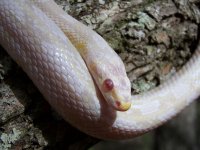 Ebru Jan '12 - close up - 8.jpg98.9 KB · Views: 97
 -
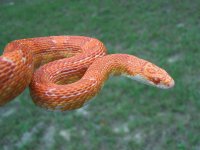 Amel Sunkissed female 9-24-09 - close up.jpg115.4 KB · Views: 98
 -
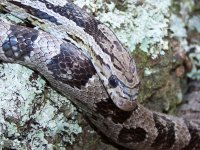 Josephine Jan '12 - close up - 2.jpg161.5 KB · Views: 98
 -
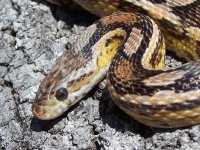 Striker March '09 - close up - 6A.jpg214.3 KB · Views: 98
 -
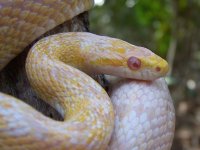 Ione Feb '12 - close up - 67 - brightness contrast only.jpg91.4 KB · Views: 97