

-
Hello!
Either you have not registered on this site yet, or you are registered but have not logged in. In either case, you will not be able to use the full functionality of this site until you have registered, and then logged in after your registration has been approved.
Registration is FREE, so please register so you can participate instead of remaining a lurker....
Please be certain that the location field is correctly filled out when you register. All registrations that appear to be bogus will be rejected. Which means that if your location field does NOT match the actual location of your registration IP address, then your registration will be rejected.
Sorry about the strictness of this requirement, but it is necessary to block spammers and scammers at the door as much as possible.
You are using an out of date browser. It may not display this or other websites correctly.
You should upgrade or use an alternative browser.
You should upgrade or use an alternative browser.
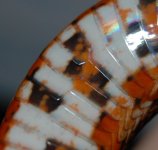
Is this normal?
- Thread starter ZoologyMajor
- Start date


TWGarland
Active member
is that even what you call the bit that links the snake to the inside of its egg? To be honest that was just a complete guess. My snake has a similar break in the belly scutes that i always thought was the snake equivalent of a belly button, but then again i could just be an idiot?:crazy02:


MerlinsPop
New member
I was going to ask the same question, because I noticed Butter has at least one divided scales like that, but it can't possibly be the 'bellybutton' unless it's only about 5 inches down from the neck on a 4 foot snake.
TWGarland
Active member
hmm, you see my snake has it towards the backend of the snake, above the cloaca, so it owuld be where you think on mine...
Maybe it has something to do with the angle the egg lies at during incubation. That might affect where the yolk sack sits and attaches to the snake? Thats my best guess
Maybe it has something to do with the angle the egg lies at during incubation. That might affect where the yolk sack sits and attaches to the snake? Thats my best guess
ZoologyMajor
100% Addicted
Interesting hypotheses. Makes me curious but I'm just glad that mine isn't the only one that has it.

wade
Save The Humans
I have spent the last half hour reading about the anatomy of eggs and looking at sights for snake navels. I've learned alot. There are lots of different snake belly button rings. There is a town called Snake Navel, Idaho. There is very little about snakes actual navels on the internet.
I did learn that there isn't an "umbilical cord" for snakes, his belly is attached directly to the yoke.
I did learn that there isn't an "umbilical cord" for snakes, his belly is attached directly to the yoke.

toyah
Snakes in designer genes
I did learn that there isn't an "umbilical cord" for snakes, his belly is attached directly to the yoke.
Are you sure about this? I was just reading some papers about snakes (specifically about corn snakes, coincidentally) that make mention of umbilical cords. The yolk is attached to the snake by matter of the umbilical cord, surely?
Or is there another name for it in snakes ...
MerlinsPop
New member
The paper I was reading showed a narrowing of the yoke that attached to the snake. They indicated it was part of the yoke.
I'm going back to read some more.
Kinda like the mouth of a balloon? As the yolk absorbes, teh snakes just sucks the whole thing in, at least that's how I understood it.
wade
Save The Humans
I'm still reading and not finding the answer but am learning alot of other good stuff. The article I just read was talking about how much development the embryo goes through before the egg is laid. This picture is of a spotted python embryo. This picture was taken two hours after oviposition.
Last edited:
ZoologyMajor
100% Addicted
very intriguing picture.. kinda makes me wanna cry though

JustineNYC
New member
Interesting hypotheses. Makes me curious but I'm just glad that mine isn't the only one that has it.
My butter has a very noticable "belly button"


I originally didnt know what it was, thought maybe she got cut by something in her tank, and then posted the pics here. Ive kept an eye on it since, and its the same, not smaller, not bigger. I cant find the marking on any of my others.
ZoologyMajor
100% Addicted
wow yeah yours really is noticeable. I see her little head popping out over your hand...so cute.