• Hello!

    Either you have not registered on this site yet, or you are registered but have not logged in. In either case, you will not be able to use the full functionality of this site until you have registered, and then logged in after your registration has been approved.

    Registration is FREE, so please register so you can participate instead of remaining a lurker....

    Please be certain that the location field is correctly filled out when you register. All registrations that appear to be bogus will be rejected. Which means that if your location field does NOT match the actual location of your registration IP address, then your registration will be rejected.

    Sorry about the strictness of this requirement, but it is necessary to block spammers and scammers at the door as much as possible.

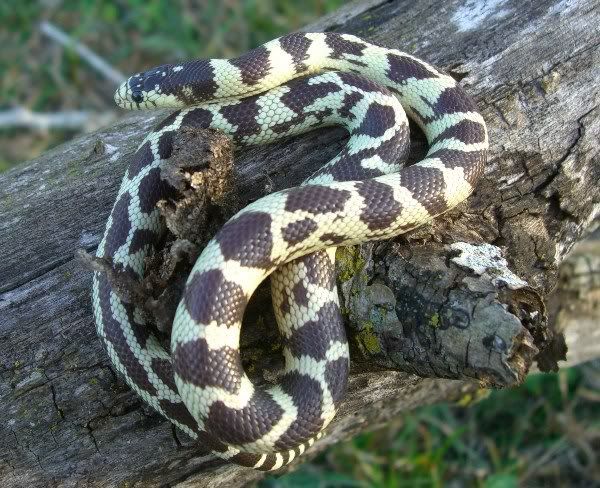
Snake turning green "literally"

oh boy, :roflmao::roflmao:

You know what? you're right- obviously having hatched two such individuals and held an adult means I'm wrong because Tyflier never saw such a snake. Woe to experience and eye-witness, obviously you knowing your way with cameras mean you know all there is to know about animal pigmentation.
And -I- take myself too seriously... if I felt any -possible- guilt of being stubborn, you just blew it out the window.

Dude, what is your problem? You know what...do some research on lighting temperatures and color casts.

The two pictures you posted...same snake? Ask your buddy that took the pictures what sort of lighting he used...

My guess is that the first one was taken using a tungsten flash, based on the high white content of the reflected light. I would guess that the second one was taken under normal household incadescant lighting. Probably between 40 and 60 watts, judging from the yellow cast.

I'm not TALKING about animal pigmentation. I'm talking about light temperature and reflectivity. I don't have to have held this hybrid hybrid to know how light interacts with reflective surfaces. And I DEFINITELY don't need a lecture on hybrids to understand temperature-related color casts of various light sources.

And yea...knowing my way around a camera DOES mean I know my way around light. That's what photography is all about...light, and how it effects the things we are looking at. There is a thing called "White Balance" which is used specifically to control color casts from various light sources. Here's an example--

profile-tail1.jpg

Here is Diamond, my boa, taken using an off-camera metal halide light source. Notice the blue tint?

tongue-and-tail.jpg

Same snake, same cage, a couple minutes later(or earlier...don't remember), taken using a TUNGSTEN flash. Notice how white the reflected light is?

Now imagine how different those two pictures would look if my boa was white...

Don't be so quick to insult people, Oren. Understanding the properties of light is something a photographer MUST know to be successful. This has nothing to do with the hybridization of the animals. I;ve seen the SAME THING in non-hybrids, pure, wild caught Cali kings.
 
Oren, Your snake pictures were outstanding, those are beautiful snakes. Sorry if I tripped one of your triggers. It was not intentional. As I said I have never had a snake hybrid of that particular combination but I still don't think the snake is turning green.

Never said that it 100% is either, just said that I have stumbled on such occurrences so I wouldn't be so quick to say the person didn't have the common sense to check and double check under different light... I got the impression that the OP didn't see it just once and rush to post here... he still insists that the color is going nutty in the post with the new photos.
People define intermediate colors slightly different sometimes though, and you have: an amateur camera, uploaded unto the web, and each of us view through a different screen- hence, I'd rather just rely on what he says.

Spiritus RIP turned orange in less than 24 hours, I took him out and checked him under various lightening... same with those two oddball hybrids back when(only they got a light pastelish-green cast).

No one promises it'll develop, or fade, or whatever. Wish I could take pictures of the two fellas that hatched here, but as you know- no longer own hybrids.(For those who wonder, colubrids are not worth the effort here... I needed to choose a focus, and Boas are definitely more appealing to me)

Once you mix genepools that nature didn't intend to mix, you're going to get new results.
 
Never said that it 100% is either, just said that I have stumbled on such occurrences so I wouldn't be so quick to say the person didn't have the common sense to check and double check under different light... I got the impression that the OP didn't see it just once and rush to post here... he still insists that the color is going nutty in the post with the new photos.
People define intermediate colors slightly different sometimes though, and you have: an amateur camera, uploaded unto the web, and each of us view through a different screen- hence, I'd rather just rely on what he says.

Spiritus RIP turned orange in less than 24 hours, I took him out and checked him under various lightening... same with those two oddball hybrids back when(only they got a light pastelish-green cast).

No one promises it'll develop, or fade, or whatever. Wish I could take pictures of the two fellas that hatched here, but as you know- no longer own hybrids.(For those who wonder, colubrids are not worth the effort here... I needed to choose a focus, and Boas are definitely more appealing to me)

Once you mix genepools that nature didn't intend to mix, you're going to get new results.

So explain to me how the same thing happens in non-hybrid animals, caught in the wild, with high-white content when you photograph them. Or even when you LOOK at them under different light sources.

Oh, masterful guru of hybrids, PLEASE exaplin to me how the exact same thing happens when the animal is NOT A HYBRID??!!??!!

For all of your bluster...you're talking out your arse, my friend...
 
The two pictures you posted...same snake? Ask your buddy that took the pictures what sort of lighting he used...

I'm not TALKING about animal pigmentation. I'm talking about light temperature and reflectivity. I don't have to have held this hybrid hybrid to know how light interacts with reflective surfaces. And I DEFINITELY don't need a lecture on hybrids to understand temperature-related color casts of various light sources.

Don't be so quick to insult people, Oren. Understanding the properties of light is something a photographer MUST know to be successful. This has nothing to do with the hybridization of the animals. I;ve seen the SAME THING in non-hybrids, pure, wild caught Cali kings.

I have utter disdain for the way you knowingly choose to express yourself.
The photos are not of the same snake, I suggest you read again rather than again start speculating.

I don't recall speaking to you, again you force yourself down my throat and then accuse me for not being a sport about it. I honestly don't recall asking for your opinion about how seriously I take myself- and here too I find you horribly under-qualified to pass any sort of judgment.

Once you declare that the fact that this is a hybrid doesn't under any circumstance can be a factor for a different color is definitely stating facts about pigmentation.

The OP did not take a photo of the snake and upon it decide it was green- he is using his -eyes-, and under different circumstances I'd wager.

You don't want to be insulted? (though I believe I was a deal kinder than you) - don't reply directly to my post/quote me- I promise you, I won't chase you around as you seem to be doing.
 
I think you guys are all wrong, and are arguing over something that is completely irrelevant. That snake is CLEARLY a green martian from outer space (hiding in a snakey body). Geeesh... all this fancy technical talk, when it's clear as day about the origin of that species...

That said, Chris... I think you are baiting Oren here. And I don't think he deserves that. I know you want to prove yourself right with evidence and justification in whatever way you can (I do exactly the same thing when debating my point). But there is truth in what you are BOTH saying. It's not black and white (if you pardon the pun). I myself have seen green tinged variable kings which is always more noticeable in dull household lighting. But it's there! Light is a very variable thing (as you well know) and it is very difficult to control EXACTLY the way you want it. I know my way around a camera and know a thing or two about light, but I don't know it all. And I struggle to capture exposure exactly the way I want it when there are sooooo many factors to consider.

You also have to remember, no two individuals will see the same thing in exactly the same way. Also take into account individuals who do not have professionally calibrated computer monitors. They may see things more exposed, less exposed, more colourful, less colourful etc etc. There's more than one way to look at a "green" snake ;)

Personally, I see the snakes pictures tinged ever so slightly with a lime mint if that makes sense. But I could be imagining it due to my love for greens and blues. My eyes see those colours with a preference and always emphasize them amongst other colours.
 
After some consideration I have decided to let this thread drop, and any sort of future discussion with you Chris.

I am sure you're not a bad guy, but I do not appreciate the way you choose to express yourself- doesn't make it bad, just means it's not to my personal tastes.
I would rather spare this lovely community such bickering- prosperity to you and your endeavors.
 
I have utter disdain for the way you knowingly choose to express yourself.
And I have utter disdain for the way you resolutely refuse to listen to any other opinion(even when the opinion is a fact) unless it is your own. Nothing either of us can do about those feelings...

The photos are not of the same snake, I suggest you read again rather than again start speculating.
Doesn't matter. It doesn't change my assessment of the light sources. Did you ask your buddy that took the pics yet, BTW? Would LOVE to hear his answers, though I seriously doubt we ever will. Afterall...wouldn't want you to actually prove me right...

I don't recall speaking to you, again you force yourself down my throat and then accuse me for not being a sport about it. I honestly don't recall asking for your opinion about how seriously I take myself- and here too I find you horribly under-qualified to pass any sort of judgment.
Well, none of that really matters, does it? I didn't realize my opinion needed to be specifrically asked for in order for me to offer it.

Oh wait...I don't need your permission to post. Right. Guess this is another moot point on your part...

Once you declare that the fact that this is a hybrid doesn't under any circumstance can be a factor for a different color is definitely stating facts about pigmentation.
I never said a hybridized animal couldn't create a different color. I said this was not the result of hybridization. Big difference...

The OP did not take a photo of the snake and upon it decide it was green- he is using his -eyes-, and under different circumstances I'd wager.
I can inmagine that the OP has viewed this "change" primarily inside his domecile...where the lights will be relatively the same each time he views the snake, but likely vastly different thean the tube flourescents at the show or the sunlight. And yes...light effects the way our eyes see, too.

You don't want to be insulted? (though I believe I was a deal kinder than you) - don't reply directly to my post/quote me- I promise you, I won't chase you around as you seem to be doing.
OK...instead of "debating" conjecture, opinion, and best guesses...let's look at the known facts.

These are the FACTS...indisputable, and non-debateable, these are the only KNOWN FACTS of this situation.

Fact #1-Thie animal in question is a hybrid
Fact #2-The animal in question is generally whiet in coloration
Fact #3-Light at various temperatures and from varying sources will absolutely create various color casts upon the subject both in phorographic reproductions and to the naked eye.

Everything else is conjecture and opinion. So...Ocum's Razor says that when you are faced with an unsolvable riddle, consider the indisputable facts and attribute the answer to the simplest, and therefor most logical, explanation.

So...according to the only known facts, which is the most logical conclusion?

Conclusion #1--hybridization has created some random genetic transmutation that causes these animals to slowly develope a green tint that sometimes is visible, sometimes is not, and sometimes goes away?

Or Conclusion #2--one of the only indisputable facts--that the light sources have caused a reflection that has a color cast to it?

You decide which one makes the most sense. But don't bother replying because I already know what you're going to say.

But I assure you...it has nothing to do with the animal being a hybrid...

Stop worrying about whether or not I know anything about hybrids, do a little research on lighting, and see what you discover.

If it will help, I'd be happy to get my wild caught, pure, non-hybrid, desert phase, black and white banded California Kingsnake out, photograph him under identical conditions using various light sources and white balance settings, and show you exactly what I'm talking about.

Than you can try to explain it using your hybridized genetic mutation garbage... Or you could simply let it go and stop trying to prove that your opinion is the only right opinion based on absolutely nothing of worth...

At least my "opinion" is based on factual information, rather than some conjecture and presuppositions that hybrids must, by their very nature, have something so ultra-special that it can't be explained with a simple trick of the light...:rolleyes:
 
I don't want to get into any bickering either, and I have no clue as to whether the OP's snake has a greenish tinge or not. Chris's two photos did show ME how much the lighting can change the appearance of the same snake on the same day & I'd like to compliment him on posting an example. My only comment on the OP's snake is that some people can distinguish slighter differences in color than others, with neither of them being colorblind, so maybe the OP is seeing a very slight green undertone in the white that someone else simply might not distinguish as greenish.

Edit: also, the ability to recognize two but not matching color samples varies with the lighting. People who do needlework will say that they need either natural daylight or special lighting to do some times of work because otherwise they end up thinking 2 threads are the same color when they aren't, then the final needlework shows the error.
 
Last edited:
I think you guys are all wrong, and are arguing over something that is completely irrelevant. That snake is CLEARLY a green martian from outer space (hiding in a snakey body). Geeesh... all this fancy technical talk, when it's clear as day about the origin of that species...
That was my first thought, too...;)

That said, Chris... I think you are baiting Oren here. And I don't think he deserves that. I know you want to prove yourself right with evidence and justification in whatever way you can (I do exactly the same thing when debating my point). But there is truth in what you are BOTH saying. It's not black and white (if you pardon the pun). I myself have seen green tinged variable kings which is always more noticeable in dull household lighting. But it's there! Light is a very variable thing (as you well know) and it is very difficult to control EXACTLY the way you want it. I know my way around a camera and know a thing or two about light, but I don't know it all. And I struggle to capture exposure exactly the way I want it when there are sooooo many factors to consider.
I'm not "baiting" Oren. I'm pointing out the fact that lighting can and WILL influence the way a snake looks, especially when the snake is white and highly reflective.

I've seen the effects of this on many different snakes, wild and captive, that have a high amount of light coloration. Obviously, lighter colors will more readily accept color casting from a light source.

You also have to remember, no two individuals will same thing in exactly the same way. Also take into account individuals who do not have professionally calibrated computer monitors. They may see things more exposed, less exposed, more colourful, less colourful etc etc. There's more than one way to look at a "green" snake ;)
I realize this. But as Oren pointed out, the OP didn';t "discover" this through a photo or a monitor...he sees it.

Personally, I see the snakes pictures tinged ever so slightly with a lime mint if that makes sense. But I could be imagining it due to my love for greens and blues. My eyes see those colours with a preference and always emphasize them amongst other colours.

I see the coor cast, too. I just am not ready to accept that it is due to this very specific hybridization creating some random genetic mutation that sometimes causes green, sometimes causes yellow, sometimes isn't visible, is intensified under different lights, sometimes goes away, and sometimes intensifies. That just doesn't make sense to me.

If the snake was GREEN, like Kermit the Frog is green, I would accept readily that it is due to the hybridization. But it isn't. It's a very slight hue shift, not "changing color".

EASILY attributed to color casting and light sources.

Not so easily attributed to some never-before-seen transmutation of genetics that Oren is the only person to have experience with...
 
I'm going back to the flamingo theory. Flamingo's get their color from the shrimp they eat, this one has clearly been eating little green aliens.

Bottom line as long as the snake is healthy and happy why not just see what happens as it ages? My opinion is still a reflective light issue. Some days my classic corn has a odd cast depending on what room we are in but it's just the nature of the scales and reflected ambient lighting.
 
I didn't read all the posts ahead of me. I'll go back and do that. A. I love your snake and although I am not so much a hybrid fan, I'd be tempted to buy that snake! B. I have a Cali King, whose name is Choco, as in Mint Chocolate Chip ice cream, because I swear sometimes she looks like she's mint green.
 
Hey everyone, sounds like I need to comment to all of this. I put this post out here because it is the second snake that I have received that is not either a rat or a corn snake. The first is a hybrid as well but a definite brown color. Here goes...I picked up this snake from federal express, brought it to work and looked at it all afternoon. It was blue, easily distinguised by the blue colored eyes and the duller color. He was at that time under my work lights (flourescent) creamy white and black. I took him home, put him in his tub and left him alone. Day two I checked on him to see if he shed, he had not and he was still creamy white and black, day three still had not shed but looked green, not kind of green but green, day four shed, shed is clear except for the black bands, snake is still green and still looks the same today. Yesterday I did put the snake in many different lighting situations and this is what I have seen. First in the darker lighting, like in his tub in his rack he is a very very strong green color. Outside of his tub he is still a very strong green color, Under flourescent lighting his is more of a green yellow, natural daylight more yellow green, household lamp light more green. The photo I took had the camera flash on, (new SLR camera and don't know how to work the thing) The pictures with the flash on show the snake to be slightly tinged. He is not slightly tinged. I understand the lighting thing and he is definitely lighter..darker in the different lights. He is not the same color as he was when I received him however which is why I put the post up here. I thought maybe it was something to do with the genetics, not necessarily the lights because my blizzard nor my opals do not ever look green (white snake reflecting thing) My first thought was maybe the genes for this type of snake does something like a flare up, like my gecko. Or maybe the kind of scales on this snake is different than what I am used to, I duuno, I was definitely curious. I tried looking all over the place on the internet and came up with nothing. Though I did see some photos of some very nice pretty yellow/green variables. Those do exist and they are nice. (well after all of this talk, maybe it is just the photos I dont know) Anyway this snake is green. I do absolutely think the lighting has an impact on the color of green this snake is but he is still green, even in the natural sunlight but lighter for sure. He just ate on Monday and I didn't even want to snap those photos and bother him yesterday while he was still digesting but...I will take him out this weekend and I guess at this point just watch. I think at this point I am thinking that after his shed, he has turned more of a green color that is strongly distinguishable in darker lighting. I don't know, I read someone say it is just the light playing with my eyes because of the white but may I ask why is that not happening with the opals or the blizzard? Then I would understand that statement more. I do believe the light does have something to with it because I did mention in my post at first that my sons new cal king looked kinda yellow green, more yellow than green when we put him in his feeding tub, he stayed that way but then back under his flourescent light in his 10g he is clearly black and white. I was not there when he went back in his 10g but I would guess it is safe to say that maybe the color shift was immediate due to the lighting. When my snake started to look to green I truly believed it was just something to do with the genes maybe, like a flare up, like I first mentioned. My sons now this one , so I starting investigating. Seems it isn't that. I am trying to get my thoughts around all of this myself. Maybe it is a combination of the two things, this snake has some nice green/yellow coloring that looks for sure green in a low light enviroment that showed up after his last shed. I am sorry there has been so much negative debate. I posted here for expert thoughts and instead there has been quite a bit of insults flying around (those directed at me, trust me I blew them off) for others, sorry I brought this on. But, I do appreciate everyone's opinon thus far for sure. Sorry again for so long, but if you haven't guessed I tend to type and think at the same time :eek:
 
I didn't read all the posts ahead of me. I'll go back and do that. A. I love your snake and although I am not so much a hybrid fan, I'd be tempted to buy that snake! B. I have a Cali King, whose name is Choco, as in Mint Chocolate Chip ice cream, because I swear sometimes she looks like she's mint green.


Thank you Nanci, I am very excited to have received this snake. That is very interesting that you mentioned that sometimes your Cali King looks mint green, is it perchance in very low lighting. Is he strong bright white and black in flourescent lighting. I ask because my son's (a new snake as well) looked a little yellow green one day, (kinda what started all of this) His snake back home under it's light is totally bright white and black. My snake on the other hand isn't bright white, he never was, he was more creamy white, but now he is more green yellow, more yellowy under brighter light more greeny under low lighting. Interesting about Choco. I named this guy Patrick (thinking green with St.Patrick's day) because of his color.
 
Dear lady, you did nothing to apologize for. Some of us just to play well with others.
 
Tula, wanted to use this post to say, your photos were the inspiration for me to buy my DSLR camera a few weeks ago. I cannot use the darn thing (hence the crappy photos) yet, but I am studying like crazy.

Wade, if this snake sprouts horns, honestly I would be very upset. LOL
 
Thank you Nanci, I am very excited to have received this snake. That is very interesting that you mentioned that sometimes your Cali King looks mint green, is it perchance in very low lighting. Is he strong bright white and black in flourescent lighting.

Seems to be any light. Choco is a Coastal Cali, so she is a pale yellow/vanilla color with deep chocolate brown markings.

Choco12_29_06115cr600.jpg
 
Tula, wanted to use this post to say, your photos were the inspiration for me to buy my DSLR camera a few weeks ago. I cannot use the darn thing (hence the crappy photos) yet, but I am studying like crazy.

Wade, if this snake sprouts horns, honestly I would be very upset. LOL

If your snake sprouts horns I'll buy it.
 
Seems to be any light. Choco is a Coastal Cali, so she is a pale yellow/vanilla color with deep chocolate brown markings.

Oh she is beautiful, just beautiful.
So would you venture to say that she is yellow/green/vanilla color w/ deep chocolate brown markings. Does she usually have the tinge of green? Did she always look those colors?
 
Chris, you are unbelievable .

I don't see how I am "unbelievable".

Oren lashes out at you, Wade, because you have no experience with these specific hybrids. I point out that the most likely and logical scenario is not the hybridization causing the snake to change it's colors dramatically with age, but the lighting. Oren insults me, by basically saying I have no idae what I am talking about because I haven't dealt with "these specific hybrids".

I show precisely how and why different lights can cause different hue shifts and color casts, vs Oren's "experience" which shows that these snakes develope, lose, re-develope, lose again, and change their colors because they are hybrids(and this is the first time it's ever been discussed)...but I'm unbelievable.

This forum is unbelievable. How is it that I am the bad guy for pointing out the simplest and most obvious answer to the question, but Oren is somehow the victim after insulting you and me, because we haven't dealt with tese hybrids? That makes as much sense as the mutated hybrid gene theory...

To the OP...your snake is awesome. Hybrid or not it's gorgeous. I actually like many hybrids, and your's is beautiful. It is quite possible, given the mix of species, that there is some natural yellow and/or green hue to the snake's white coloration that is more or less noticeable under different light sources. Greeri come to mind... some alterna seem to have a slight green hue to them as well, so it is very possible. Cali kings can often have a slight yellow hue to their white, and some are even yellow instead of white, so there is [potential there for actual coloration in the white. It's just really difficult to say for sure...

Regardless, it's an awesome snake. I doubt highly that your snake will develope enough green to be comparable to, say a bullfrog. I doubt the color will change dramatically for any reasons, other than natural maturation. Love it. Enjoy it. It's a beautiful animal.
 
Back
Top