Just to clarify for others reading through, you would not get any ultras het caramel from this pairing.
An orange is either amel + a new gene or amel + het caramel. Its not a caramel. Not sure how that changes the rest of your ideas!
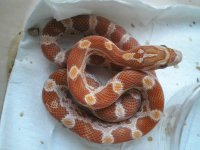
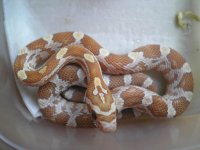
I would say, keep back a variety (variety being key here if anyone wants to have a good case in the future IMO) of these hatchlings and see what they look like in a year or so. If there is a new gene here and it is dominant or co-dominant, we identify the following phenotypes:
ultramel
amel
ultramel buff
orange
If your snakes are het caramel and there is no new gene we'd see the following:
ultramel het caramel, which would appear to be an ultramel buff
amel het caramel, which would appear to be an orange
butter
golddust
All of these will be easier to identify after giving the hatchlings some time to develop their yellow colors. Trying to decide what each of these snakes really is is far to difficult at the moment IMHO, especially considering how complex this topic has become. EDIT: Also, I wanted to add, if all that is happening is that these snakes are simply expressing the caramel gene extensively in the heterozygous form, ultramels het caramel may look very caramel-y, making things hard to identify.
And i haven't even thought of what we'd see if you DO have a new gene, and it is on the same locus as caramel.... eek
Maybe we can get this sorted out completely by 2010!


.jpg)

.jpg)
.jpg)
