• Hello!

    Either you have not registered on this site yet, or you are registered but have not logged in. In either case, you will not be able to use the full functionality of this site until you have registered, and then logged in after your registration has been approved.

    Registration is FREE, so please register so you can participate instead of remaining a lurker....

    Please be certain that the location field is correctly filled out when you register. All registrations that appear to be bogus will be rejected. Which means that if your location field does NOT match the actual location of your registration IP address, then your registration will be rejected.

    Sorry about the strictness of this requirement, but it is necessary to block spammers and scammers at the door as much as possible.

Your help needed!

eeji

New member
With too many projects and too little time it seems I have gotten behind with keeping the cornsnake section at Ians Vivarium up to date so I am dedicating more time to get the gaps filled.

Over the last few weeks there have been 35 new additions, but there is still lots of stuff missing.

This is where I need the help - if you have a morph that isn't yet on IV please get in touch and I will create the new pages required and we can help make it the most complete online reference.

:cheers:
 
I would like to see the Alabama locality added as well.
Here's something I wrote up a little while back, for Nate to use on iHerp:

"The Alabama Corn is found in most parts of Alabama.

Females tend to develop a dark grey, often metallic ground color, while the males tend to be more of a bronze color. The saddles are generally from maroon to brick red, with a thick black border. The eyes are usually a golden brown, & they have normal belly checkers. The Alabama babies hatch out almost Anerytheristic looking.

Other morphs are being explored at this time with the Alabama's. Very few are working with the Alabama line at this time, but they are working to continue the Alabama line, in hopes that it becomes more well-known."


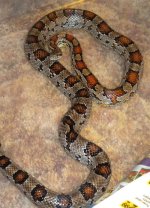
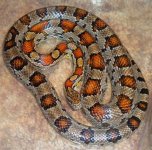
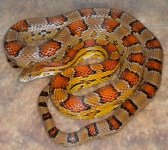
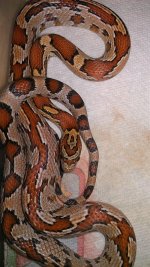
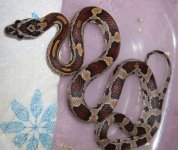
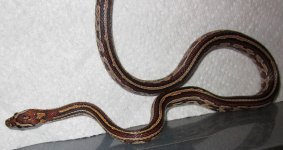
Here's a few pics of my Alabama's, with their history.
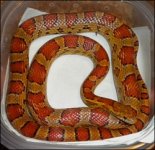
First is Mica, who was WC in 2008 in north central Alabama (if I remember correctly). She was gravid when caught, unknown wild male.
I obtained her from Walt Smith.
I also have a 1.1 pair of the babies from that initial clutch.
The females have the grey (metallic) ground color, & the male has more of a bronze ground color.
In my limited experience, I have yet to see a male with the grey ground color, only the females.
 

Attachments

  • mica.jpg
    mica.jpg
    113.1 KB · Views: 117
  • katzen.jpg
    katzen.jpg
    105.6 KB · Views: 117
  • silber.jpg
    silber.jpg
    89.3 KB · Views: 117
I did not get Alabama babies last year, but I will be trying to continue the Alabama line. I know of a couple others who want to continue the Alabama line as well.
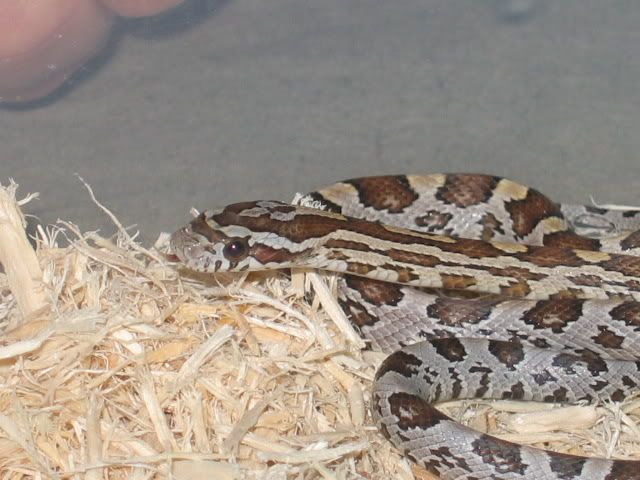
I did cross Alabama with Tessera last year, (thanks to Tara, who loaned her Tessera male to me) & I noticed a pattern, that when Alabama is crossed with another morph, they seem to all come out with a tan-ish ground color.
I will attatch pics of babies from that crossing.
 

Attachments

  • devon.jpg
    devon.jpg
    166.4 KB · Views: 117
  • 1024stone2.jpg
    1024stone2.jpg
    60.5 KB · Views: 116
  • 1024allie.jpg
    1024allie.jpg
    57.4 KB · Views: 116
  • 1024zayvion.jpg
    1024zayvion.jpg
    62.8 KB · Views: 117
There are some interesting markings on some of the babies from the Alabama X Tessera clutch, that appear to look like SK het markers (I have 100% het SK snakes with the same type markers) & I plan on testing that out as well.

I also have a 1.1 pair that I got from Walter, that are from an Alabama male X Hypo Okeetee female. Both male & female have the tan ground color.

There's still so much to learn about the Alabama locality, but a few of us want to continue working with the Alabama locality, & make it a recognized locality morph as Miami & Okeetee are.
 

Attachments

  • tane.jpg
    tane.jpg
    82.7 KB · Views: 116
  • tora.jpg
    tora.jpg
    27.7 KB · Views: 115
Here is one of our Alabama females from a WC female who layed a clutch of eggs for us this year.


WC Alabama female - Pike County

 
A big thanks to Ian for recognizing the Alabama as a locality morph and for all of his hard work on this wonderful resource. Thanks again.
 
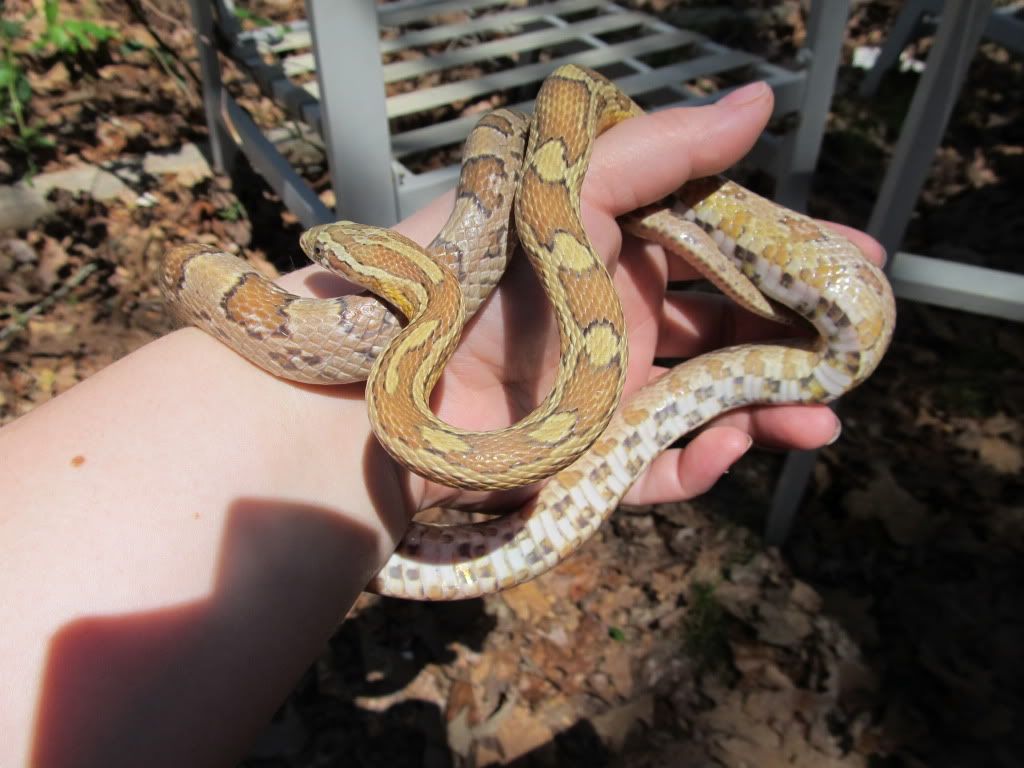
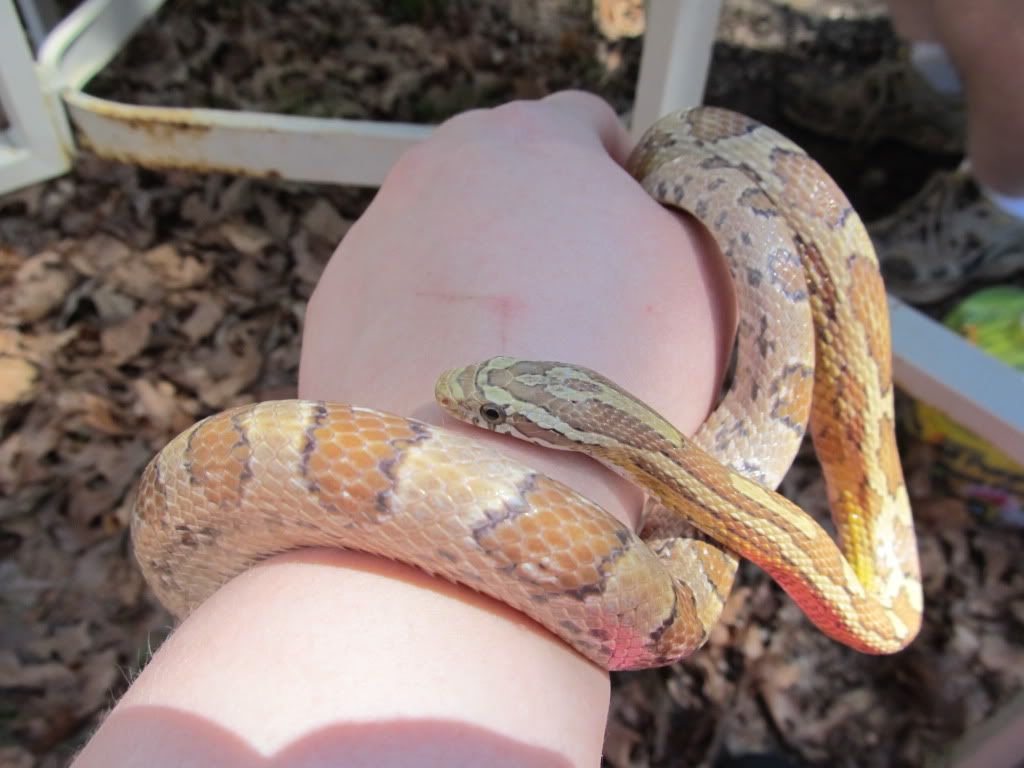
Dilute Caramel

Dilute Caramels aren't on the list either.

Baby photo, 3 months
morganscamera230.jpg


2.5 years old
outside036.jpg


outside038.jpg
 
I am suprised the Creamsicles aren't listed in the Hybrids section?

Species Description from Don Soderberg's web site
"Formerly considered an intergrade of what used to be two corn snake subspecies (Elaphe guttatus guttatus X Elaphe guttatus emoryi), Creamsicles are the final product of crossing an Emory's Rat (aka: Great Plains Rat Snake) with an Amel corn. Since the new taxonomic classification assigns distinct species to each (Pantherophis emoryi and Pantherophis guttatus), in herpetocultural vernacular, Creamsicles are now officially considered hybrids. ANY progeny from Creamsicles or any corn snake that has any degree of Emory's Rat Snake in it, is considered a HYBRID. The albinos are called Creamsicles and the non-albinos are often called Root Beers."

Photo's are of my male Creamsicle, Faygo!
IMG_2085.jpg


IMG_3409.jpg
 
Thank you for the comments and photos everyone, the site wouldn't exist without your help :cheers:

Everything that has been posted that is not yet on I will create the new pages tomorrow (its getting late here! :D )

....and whoops!!!! yes, I forgot to add creamsicles and all the other corn x emoryi hybrids when the hybrid section returned so those too will be put back on :eek: :)
 
thank you everyone, all suggestions have now been added (plus a few more corn x emoryi hybrids).

Tara, I will read that thread tomorrow and get in touch with Barbara :)
 
LOL I was just gonna post about them here, thanks Tara :) I did decide to call them micro scales indeed, micro pave did not get into people's minds, not even into my own, hehe.
 
Any way to get a lookup so when you are looking at say an amel, you would have a list of all the morphs that amel is one of the genes used to make it?
 
Back
Top